How Accurate Is Robert Graysmith's Zodiac Book and Investigation?
Robert Graysmith’s 1986 book Zodiac is widely regarded as the most comprehensive narrative of the Northern California serial killer case, responsible for popularizing the mystery globally. However, modern true crime researchers and forensic developments have identified significant factual discrepancies in his work. While his dedication to compiling police reports is highly respected, his specific theories—particularly his focus on Arthur Leigh Allen as the sole suspect and his proposed solution to the 340 cipher—have largely been excluded by modern DNA analysis and cryptographic breakthroughs.
Who is Robert Graysmith and why did he investigate the Zodiac?
To understand the lens through which the Zodiac book was written, it is necessary to look at the author's background. Robert Graysmith was not a homicide detective, a private investigator, or even a crime reporter. In 1969, during the height of the Zodiac killer's reign of terror, Graysmith was employed as a political cartoonist for the San Francisco Chronicle.
His proximity to the case was largely geographical and circumstantial. Because the Zodiac killer frequently mailed his taunting letters, ciphers, and even a piece of victim Paul Stine's blood-stained shirt directly to the Chronicle, Graysmith found himself in the newsroom as these pieces of evidence arrived. While he was not part of the editorial team making decisions about publishing the letters, his presence in the building sparked an intense personal interest in the case.
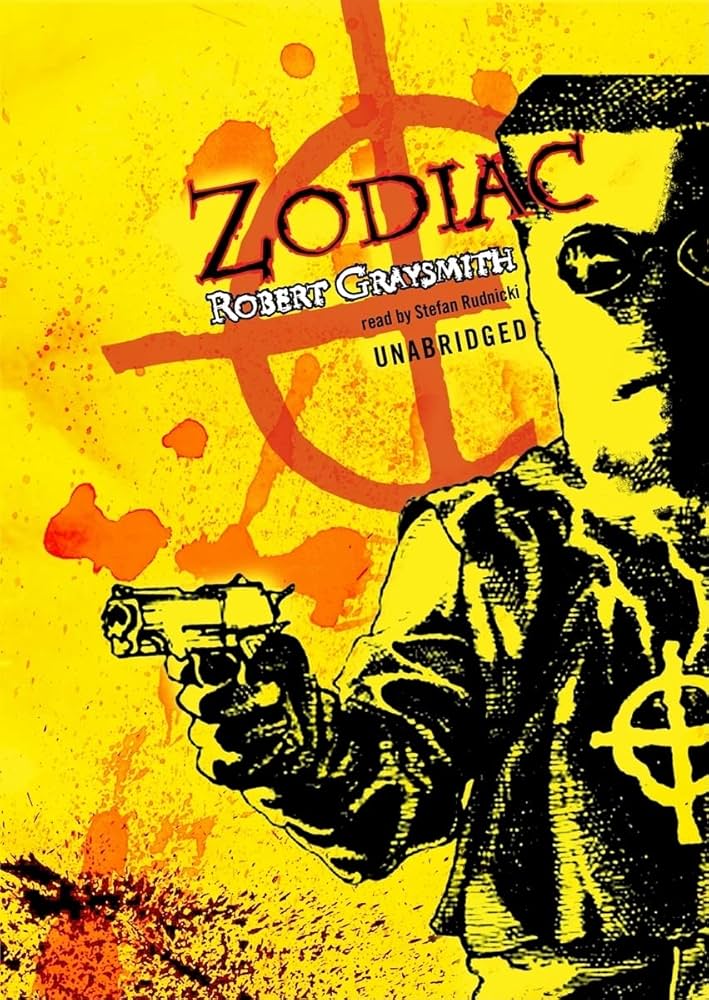
Image source: Amazon.com
As the official police investigations in Vallejo, Napa, and San Francisco began to stall in the mid-1970s, Graysmith took it upon himself to compile the disparate pieces of the puzzle. He spent between 10 and 13 years conducting an independent investigation outside of his professional duties. He interviewed surviving victims, spoke with local law enforcement (most notably SFPD Inspector Dave Toschi), and gathered thousands of pages of public and private records.
This decade-long investigation came at a significant personal cost, contributing to the end of his marriage—a narrative thread that would later become a central focus of the Hollywood adaptation of his life. His exhaustive compilation of facts, witness statements, and personal theories culminated in the 1986 publication of Zodiac, which eventually sold over 4 million copies and fundamentally shaped the public's understanding of the case.
What are the main differences between the Zodiac and Zodiac Unmasked books?
Readers exploring Graysmith's work often encounter confusion regarding his two primary texts on the subject. While they cover the same overarching case, their focus, tone, and legal constraints differ significantly.
The original 1986 book, commonly referred to by researchers as the "Yellow Book," was written while many of the primary suspects were still alive. Because of strict libel laws, Graysmith was forced to use pseudonyms for his suspects. The most famous of these was "Bob Starr," the name Graysmith assigned to his primary suspect, Arthur Leigh Allen. The first book functions primarily as a chronological true-crime procedural, detailing the murders, the letters, and the atmosphere of fear in the Bay Area.
In 2002, a decade after Arthur Leigh Allen's death, Graysmith published the sequel, Zodiac Unmasked. With the threat of libel removed, Graysmith dropped the pseudonyms and focused the narrative almost entirely on building a retroactive case against Allen. The tone shifts noticeably from investigative reporting to a more accusatory, suspect-driven argument.
| Feature | Zodiac (1986) | Zodiac Unmasked (2002) |
|---|---|---|
| Primary Focus | Chronological overview of the crimes, letters, and police response. | Deep dive into Arthur Leigh Allen as the definitive suspect. |
| Suspect Names | Pseudonyms used (e.g., "Bob Starr", "Donald Andrews"). | Real names used (Arthur Leigh Allen, Rick Marshall). |
| Narrative Style | Procedural, atmospheric, heavy on minute details and witness accounts. | Argumentative, focused on circumstantial evidence and suspect psychology. |
| Key Additions | Initial cipher theories, crime scene maps, victim backgrounds. | Interviews with Allen's friends, analysis of search warrants. |
Is Robert Graysmith’s Zodiac book historically accurate?
This is the most heavily debated topic within the true crime community. While Graysmith is credited with preserving a massive amount of data that might otherwise have been lost, modern researchers have identified several areas where the narrative strays from verifiable police reports into speculative fiction. Discussions among dedicated case researchers frequently highlight specific discrepancies that alter the perception of the crimes.
The Weather Discrepancy
Inaccurate In his description of the December 20, 1968, murders of David Faraday and Betty Lou Jensen on Lake Herman Road, Graysmith sets a chilling scene, claiming the temperature was a freezing 22°F. He uses this detail to emphasize the cold-blooded, calculating nature of the killer waiting in the freezing dark. However, historical meteorological data for Vallejo on that night indicates the temperature was actually between 34°F and 44°F. While a minor detail, critics point to this as an example of Graysmith sensationalizing facts to create a more compelling narrative atmosphere.
The Tucker Torpedo Anachronism
Highly Improbable When discussing the 1966 murder of Cheri Jo Bates in Riverside (a crime often attributed to the Zodiac, though debated), Graysmith claims a witness saw a "Tucker Torpedo" following the victim. Automotive historians and researchers are quick to point out that only 51 Tucker 48 vehicles were ever produced. The likelihood of a random stalker driving one of the rarest collector cars in American history is statistically near zero, suggesting Graysmith either misunderstood a witness statement or included an unverified rumor.
The Map Manipulation Claim
Disputed Context In the 1986 book, Graysmith includes a hand-drawn map of the Blue Rock Springs incident, specifically showing the location of the phone booth where the killer called the Vallejo Police Department. Community researchers analyzing the book have noted that Graysmith's map makes it appear as though the phone booth was directly across the street from the police station, mere feet away. In reality, the booth was located several blocks further down the road. Critics argue this map was drawn to exaggerate the killer's brazenness.
The Light Projector Theory
Debunked One of Graysmith's most criticized theories involves the Lake Berryessa attack. To explain why the handwriting on the victim's car door matched the Zodiac's letters, but did not perfectly match Arthur Leigh Allen's handwriting, Graysmith proposed that the killer used a battery-operated light projector. According to this theory, the killer projected pre-traced letters onto the car door in the dark to disguise his natural handwriting. Law enforcement and forensic experts have largely dismissed this as a convoluted attempt to force the evidence to fit a specific suspect.
Why did Robert Graysmith believe Arthur Leigh Allen was the killer?
Despite the lack of physical evidence, Graysmith remained steadfast in his belief that Arthur Leigh Allen was the Zodiac killer. His conviction was based on a mountain of circumstantial evidence that, when viewed together, presented a compelling—if legally insufficient—case.
The circumstantial connections included:
- The Watch: Allen owned a Zodiac brand watch, which featured the exact crosshair logo the killer used to sign his letters.
- The Boots: Footprints at the Lake Berryessa crime scene were identified as coming from size 10.5 Wing Walker military boots. Allen wore size 10.5 and owned a pair of Wing Walkers.
- The Conversation: A friend of Allen's, Don Cheney, reported to police that Allen had spoken about writing a novel where a killer hunted humans, called himself "Zodiac," and attached a flashlight to the barrel of his gun—details that mirrored the actual crimes.
- Proximity: Allen lived in Vallejo, minutes away from the first two crime scenes, and was reportedly in the area of Lake Berryessa on the day of the attack there.
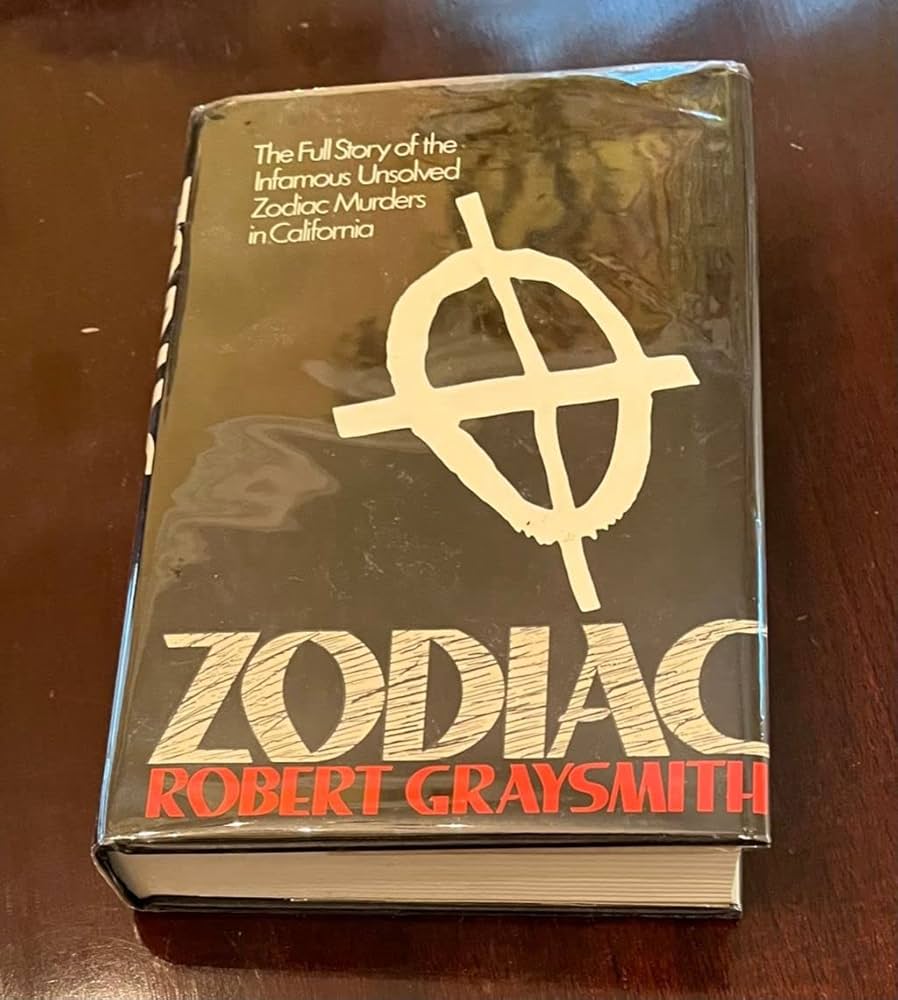
Image source: Amazon.com
The "Two-Man Theory" Pivot
As forensic science advanced, the case against Allen began to crumble. Fingerprints found at the Paul Stine murder scene did not match Allen. Handwriting experts consistently concluded that Allen did not write the Zodiac letters. Most critically, a 2002 partial DNA profile developed from the stamps on the Zodiac letters excluded Allen.
To reconcile his belief in Allen's guilt with the exculpatory scientific evidence, Graysmith introduced the "Two-Man Theory," as noted in various analyses of his later work. He proposed that Allen committed the physical murders, but an unknown accomplice actually wrote and licked the stamps on the letters. This theory is widely viewed by modern researchers as an example of confirmation bias—altering the theory to protect the suspect rather than following the evidence.
How does the 2007 David Fincher movie compare to the original book?
Director David Fincher's 2007 film Zodiac, starring Jake Gyllenhaal as Robert Graysmith, introduced the case to a new generation. While the film is officially based on Graysmith's books, Fincher and screenwriter James Vanderbilt conducted their own extensive independent investigation, interviewing surviving investigators and witnesses.
As a result, the film is often considered more factually rigorous than the books it is based on. Fincher deliberately omitted some of Graysmith's more speculative theories (such as the light projector) and streamlined the narrative to focus on the toll the investigation took on the men involved.
- The Hardware Store Encounter: The film features a dramatic, silent stare-down between Graysmith and Arthur Leigh Allen in a Vallejo hardware store. While Graysmith did track Allen down to a hardware store in real life, the encounter was much less cinematic, and they did not have the definitive "look" portrayed in the film.
- The Basement Scene: One of the film's most terrifying sequences involves Graysmith in the basement of Bob Vaughn, a silent film organist. While Graysmith did visit Vaughn's home and felt uneasy, the intense, horror-movie atmosphere of the scene was heavily dramatized for cinematic tension.
- Collaboration with Paul Avery: The film depicts a close, albeit strained, partnership between Graysmith and star reporter Paul Avery (played by Robert Downey Jr.). In reality, their collaboration was much more limited, as Avery was a senior reporter and Graysmith was a cartoonist.
Did Robert Graysmith actually solve the 340 cipher?
In the 1986 book, Graysmith presented his own solution to the Zodiac's infamous 340-character cipher, which had baffled FBI and Navy cryptanalysts since it was mailed in 1969. Graysmith's proposed solution relied heavily on anagramming—rearranging letters to form words—and produced a disjointed message that included the word "AMPHIBIAN."
For decades, cryptographers warned that Graysmith's method was mathematically unsound, as anagramming a text of that length allows the solver to essentially create any message they want. This skepticism was definitively validated in December 2020.
A team of international codebreakers—David Oranchak, Sam Blake, and Jarl Van Eycke—successfully cracked the 340 cipher using custom software and advanced cryptographic techniques. The official solution, verified by the FBI, revealed a message starting with "I HOPE YOU ARE HAVING LOTS OF FUN IN TRYING TO CATCH ME."
The 2020 breakthrough proved that the cipher was a transposition cipher read diagonally, completely invalidating Graysmith's 1986 anagram solution. This development further cemented the modern view that while Graysmith was an excellent archivist of the case, his analytical conclusions were frequently incorrect.
Tips for reading the dense 500-page Zodiac investigation
For those picking up the 1986 book today, the reading experience can be challenging. Reader reviews frequently cite the overwhelming "information dump" style of the narrative. Graysmith includes almost every detail he uncovered, regardless of its narrative importance—from the exact brand of a witness's watch to the minute-by-minute bus schedules of San Francisco transit.
To navigate the book effectively, consider these strategies:
- Use the "Skim vs. Deep Dive" approach: Read the chapters detailing the four canonical attacks (Lake Herman Road, Blue Rock Springs, Lake Berryessa, and Presidio Heights) closely. When the narrative shifts to pages of unedited witness transcripts or transit routes, feel free to skim.
- Keep a character guide: Because Graysmith uses pseudonyms in the 1986 book, it helps to keep a cheat sheet. Remember that "Bob Starr" is Arthur Leigh Allen, and "Inspector William Armstrong" is a composite/pseudonym for various investigators.
- Cross-reference online: The true crime community has digitized almost all the original police reports. When Graysmith makes a bold claim, cross-reference it with resources available on dedicated forums to see if the primary documents support his narrative.
Frequently Asked Questions
The Bottom Line on Robert Graysmith’s Legacy
Robert Graysmith's contribution to the Zodiac mystery is a complex mix of unparalleled archival dedication and flawed investigative conclusions. While his work defined the true crime genre for a generation, modern readers must approach his texts with a critical eye.
- He preserved the case: Graysmith is largely responsible for keeping the Zodiac mystery in the public consciousness for over 50 years.
- The narrative contains errors: Verifiable discrepancies exist regarding weather data, vehicle identifications, and crime scene maps.
- The primary suspect is disputed: His focus on Arthur Leigh Allen is not supported by modern DNA or fingerprint evidence.
- The cipher solution was wrong: His 1986 solution to the 340 cipher was definitively debunked by the official 2020 decryption.
- It remains essential reading: Despite its flaws, the 1986 book is still a foundational text for understanding the timeline and atmosphere of the crimes.