
A polar bear is significantly larger and more powerful than a human, typically weighing 5 to 6 times more than an average adult male. While a human stands roughly 5.7 to 6 feet tall, a male polar bear can reach 10 feet when standing on its hind legs. In terms of raw power, a polar bear's bite force of 1,200 PSI is nearly 8 times stronger than a human's, and their physical strength is estimated to be 20 times greater than that of an average person.
When we look at the vast expanse of the Arctic, the polar bear (Ursus maritimus) stands as the apex figure of survival. For humans, understanding our place relative to these giants is often a matter of perspective and physics. We are biologically outclassed in almost every physical metric, from bone density to metabolic efficiency. However, the comparison is not just about who is bigger; it is about how two different species have evolved to occupy their respective niches.
This exploration dives deep into the data-driven reality of the polar bear compared to a human. We will examine the "Joule gap" in physical impact, the genetic mutations that allow bears to thrive on diets that would be lethal to us, and the specific anatomical advantages that make them the most specialized marine mammals among bears.
Visualizing the scale of a polar bear requires moving beyond simple numbers. Imagine a 1,000-pound male polar bear standing next to a 180-pound human. The sheer mass of the bear is overwhelming; it is the difference between a compact sedan and a heavy-duty pickup truck. While humans are relatively tall for primates, we appear diminutive next to a bear that stands 4 to 5 feet at the shoulder even when it is on all four legs.
According to visual scale data, the impact of a bear standing on its hind legs is one of the most striking sights in nature. At 8 to 10 feet tall, a bear can look into a second-story window, while a human's reach barely clears the bear's chest. This height advantage is not just for show; it allows the bear to scan the horizon for seals or potential threats across the flat sea ice.
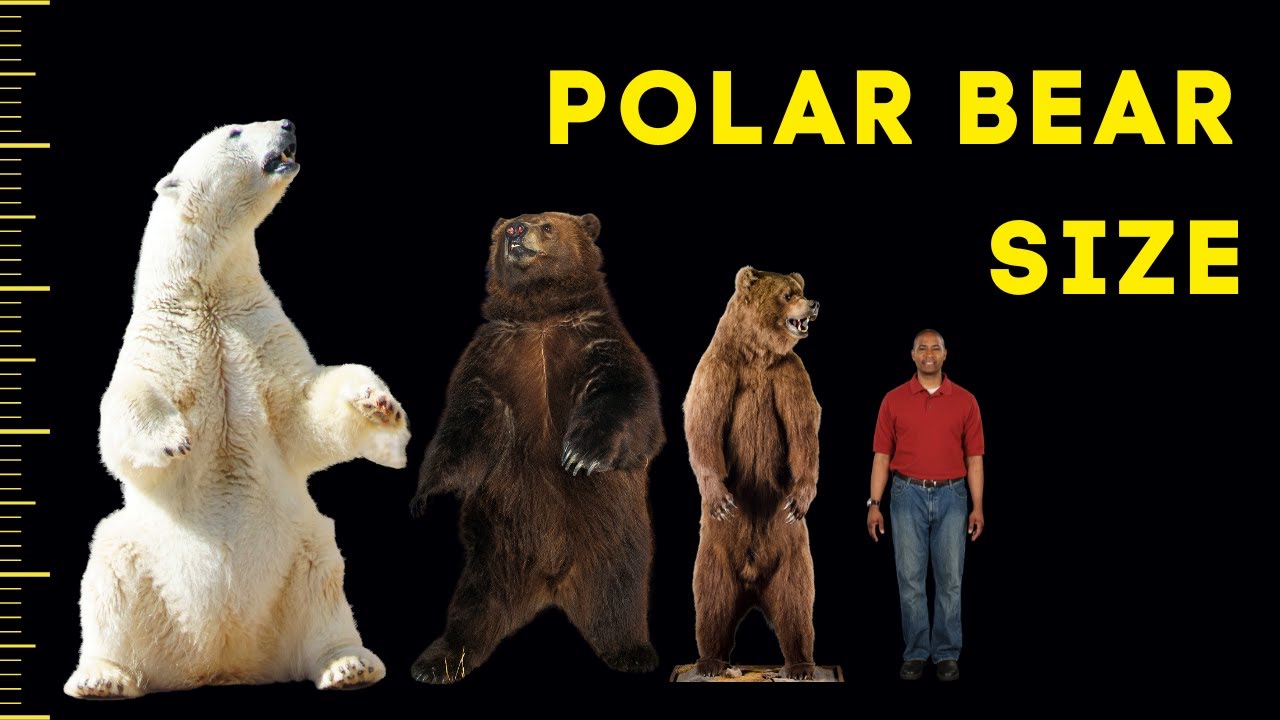
Weight ratios further emphasize this disparity. A single adult male polar bear weighs as much as five to six average adult humans combined. Even female polar bears, which are significantly smaller than males, typically range between 440 and 660 pounds, still doubling or tripling the weight of a healthy human male. This mass is not just "bulk"; it is a combination of dense muscle, heavy bone structure, and a thick layer of blubber that acts as both fuel and insulation.
| Metric | Average Human (Male) | Polar Bear (Male) |
|---|---|---|
| Weight | 180 - 200 lbs | 900 - 1,500 lbs |
| Height (Standing) | 5.7 - 6.0 ft | 8.0 - 10.0 ft |
| Shoulder Height | N/A | 4.0 - 5.3 ft |
| Bite Force | 160 PSI | 1,200 PSI |
| Top Speed | 15 - 28 mph (Sprint) | 25 mph (Sprint) |
One of the most common ways to grasp the scale of a polar bear is the "dinner plate" comparison. A polar bear's paw can measure up to 12 inches in width. To put that in perspective, place your hand against a standard large dinner plate; the bear's paw would likely cover the entire surface and then some. For most humans, a single bear paw is roughly the same size as their entire torso or head.
These paws are highly specialized tools. Unlike human hands, which are designed for fine motor skills and manipulation, bear paws are built for traction and power. They feature small bumps called papillae on the pads, which act like natural snow tires to prevent slipping on the ice. Furthermore, their claws are non-retractable and can reach 2 inches in length. While human fingernails are thin and fragile, bear claws are thick, curved, and designed to hook into the thick hide of a ringed seal or provide grip while climbing pressure ridges in the ice.
In the realm of physical combat or raw labor, the gap between species is astronomical. To understand the strength of a polar bear, we have to look at "power scaling." Research into animal mechanics suggests that to match the physical output of a bear, a human would need to be roughly 20 times stronger than the average person. This would mean a human capable of bench-pressing over 2,600 pounds—a feat that far exceeds any recorded human achievement.
This strength is most evident in their bite force. A human bite, while capable of chewing tough food, generates about 160 pounds per square inch (PSI). A polar bear, however, delivers a crushing 1,200 PSI. This force is necessary for their survival; they must be able to bite through the thick, frozen blubber and heavy bones of seals. In a hypothetical physical interaction, a human's skeletal structure would offer almost no resistance to such pressure.
"The physical disparity is so great that a human attempting to strike a polar bear would be akin to a toddler trying to move a brick wall. The bear's hide and fat layers alone provide a level of natural armor that human physical force simply cannot penetrate."
According to discussions in power-scaling communities, even a human with "superhuman" strength (20x) would still face significant biological hurdles, such as bone density and reach, when compared to the natural physiology of the bear. The bear is not just "stronger"; it is built from the ground up to generate and withstand massive forces.
To truly quantify lethality, we must look at kinetic energy, measured in Joules. A heavyweight boxer, one of the most physically powerful humans on the planet, can generate a punch with approximately 400 Joules of energy. While this is enough to cause severe injury to another human, it is negligible to a polar bear.
Field data suggests that stopping a charging polar bear requires a projectile with an impact energy of at least 2,700 Joules. This is why researchers and Arctic travelers carry high-caliber firearms; human physical strikes are effectively "zero impact" against a bear’s 4-inch layer of fat and dense fur. The "Joule gap" illustrates that humans are not just weaker; we operate on a completely different scale of physical consequence.
If humans are so physically outmatched, how did we ever survive alongside such predators? The answer lies in our unique shoulder anatomy. Humans are the only species on Earth capable of high-velocity, accurate projectile throwing. This evolutionary trait allowed our ancestors to hunt and defend themselves from a distance, neutralizing the bear's advantage in close-quarters strength.
Interestingly, if a human possessed the raw strength of a polar bear while retaining human throwing mechanics, the results would be terrifying. A "bear-strength" human could theoretically throw a baseball-sized rock at speeds exceeding 400 mph. The resulting kinetic energy would be equivalent to a high-caliber bullet, proving that the human "throwing engine" is a top-tier biological adaptation when paired with sufficient force.
The differences between humans and polar bears extend deep into our DNA. One of the most fascinating areas of study is the bear's ability to handle a diet that would be fatal to a human. Polar bears are hyper-carnivores, with seal blubber making up to 90% of their caloric intake. In a human, such a diet would lead to rapid cardiovascular collapse and heart disease.
However, polar bears possess a specific genetic mutation in the APOB gene. As noted in research regarding polar bear evolution, this mutation allows them to clear low-density lipoprotein (LDL) from their blood with incredible efficiency. They can remain healthy while carrying massive amounts of fat, which they use as a metabolic furnace to survive the Arctic winter. A human's daily requirement of 2,000 to 2,500 calories is a mere snack for a bear, which may consume over 100,000 calories in a single sitting after a successful hunt.
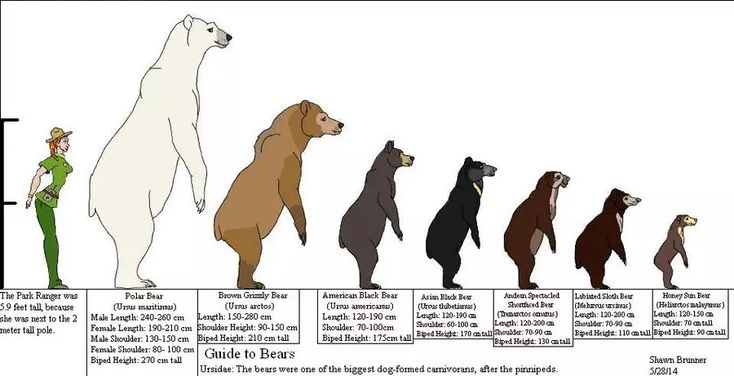
It is a common misconception that polar bears are simply "white grizzly bears." While they share a common ancestor, the two species diverged roughly 500,000 years ago. During this time, the polar bear underwent significant physiological changes to adapt to a marine environment. Their teeth became sharper for shearing meat rather than grinding vegetation, and their fur became translucent and hollow to trap heat.
Underneath that clear fur, a polar bear’s skin is actually black. This is a critical thermoregulation strategy, allowing the bear to absorb as much solar radiation as possible. Humans, by contrast, have evolved a wide range of skin pigmentations to manage UV exposure and Vitamin D production, but we lack the specialized "hollow fiber" insulation that allows a bear to stay warm even when swimming in sub-zero water.
Because of the extreme danger posed by these animals, direct human-bear interaction is strictly controlled. In the world of field research, scientists never interact with an awake, unrestrained bear. Safety is managed through a combination of aviation technology and chemical sedation.
According to Polar Bears International (PBI), the standard protocol for studying bears involves helicopter-based darting. Researchers use a sedative called Telazol, which allows them to safely land and collect data, such as weight, blood samples, and milk composition, without risking the lives of the team or the bear. This is the only way humans can "handle" a bear—by temporarily removing its ability to exert its massive physical advantage.
One of the ways we bridge the gap between our species is through tracking technology. Female polar bears are often fitted with satellite collars to monitor their movements across the shifting ice. While a 2kg collar might seem heavy to a human, for a 500-pound female bear, it represents less than 1% of her body weight. To a bear, wearing a satellite collar is equivalent to a human wearing a light necklace or a wristwatch.
Newer innovations, such as "burr on fur" tags, are even less invasive. these small trackers attach to the bear's fur like a burr and eventually fall off during the annual molt. This technology allows humans to gather vital climate change data while maintaining a respectful and safe biological distance.
Despite their status as top-tier predators, polar bears face a unique vulnerability to human-made objects. There have been documented cases where a bear, driven by hunger or curiosity, gets its tongue stuck in a discarded metal food can. In these instances, the "giant" is completely neutralized by a piece of trash. Without human intervention—often involving sedation and surgical removal—the bear would starve to death.
This highlights a profound irony: a creature that no biological force on Earth can stop is easily incapacitated by the byproduct of human convenience. It serves as a reminder that while we are physically outclassed, our environmental footprint has a disproportionate impact on their survival.
Comparing the speed of a human to a polar bear reveals another area where we are largely outmatched. On land, a polar bear can sprint at speeds of up to 25 mph. For comparison, the average human runs at about 8 to 10 mph. Even Usain Bolt, the fastest human in history, reached a top speed of 27.8 mph—meaning he could only narrowly outrun a polar bear for a very short distance, and only on a flat, paved surface.
In the water, the comparison becomes even more lopsided. Polar bears are classified as marine mammals because they spend most of their lives on the sea ice and in the water. They use their massive front paws as oars and their back legs as rudders. While a human might be a "faster" swimmer in a short pool sprint, a bear's endurance is legendary, with some individuals recorded swimming for over nine days straight to reach distant ice floes.
In almost all realistic scenarios, no. A polar bear can sprint at 25 mph, which is significantly faster than the average human's top speed of 10-15 mph. While an elite Olympic sprinter might match a bear's speed for a few seconds on flat ground, a bear's ability to maintain speed over rough, icy terrain gives it a definitive advantage. On ice or snow, a human has no chance of outrunning a bear.
It would take approximately 5 to 6 average adult humans to equal the weight of one large male polar bear. With males reaching up to 1,500 pounds and the average human weighing around 180-200 pounds, the mass disparity is one of the most significant among land-dwelling mammals. This weight is primarily composed of dense muscle and a thick insulating layer of blubber.
No, a polar bear's skin is actually black. This black pigmentation helps the bear absorb heat from the sun to stay warm in the freezing Arctic. The fur itself is translucent and hollow, which reflects light and makes the bear appear white or creamy. This combination of black skin and clear fur is a highly efficient thermoregulation system that humans lack.
Biologically speaking, it is highly unlikely. A polar bear's hide is extremely thick, and it is protected by up to 4 inches of fat and two layers of dense fur. Human strikes, even from professional athletes, do not generate enough kinetic energy (Joules) to reach the bear's vital organs or cause significant trauma. The bear's skeletal structure and muscle mass act as a natural armor that human physical force cannot overcome.
Surprisingly, polar bear cubs are born much smaller than human babies. A newborn cub weighs only 1 to 1.5 pounds, roughly the size of a guinea pig. In contrast, the average human infant weighs between 6 and 9 pounds. However, the cubs grow at an incredible rate due to the high fat content of their mother's milk, quickly overtaking human children in size within their first year.
The comparison between polar bears and humans highlights the extreme specialization required to survive in the Arctic. Here are the essential facts to remember:
To learn more about how these incredible animals are adapting to a changing climate, consider supporting reputable conservation efforts that monitor bear populations through non-invasive tracking.
