How Robert Graysmith’s Real Life Obsession Shaped the Zodiac Movie
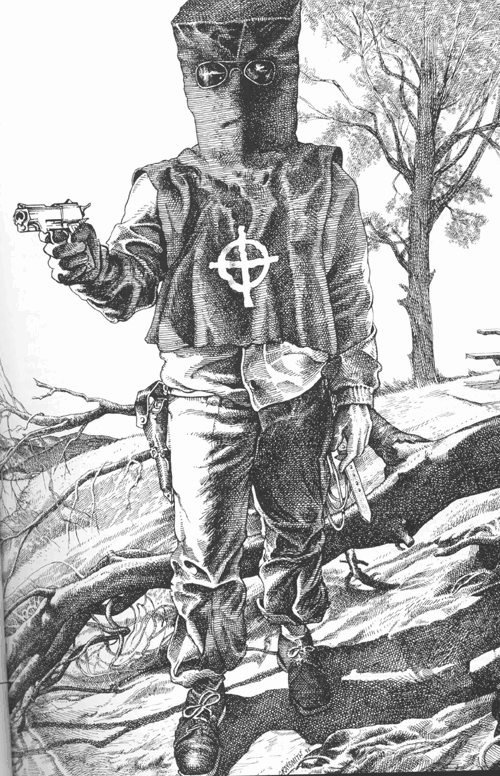
Image source: RETROCRUSH
Who Was the Real Robert Graysmith at the San Francisco Chronicle?
When the Zodiac killer began sending cryptic letters and ciphers to Bay Area newspapers in 1969, Robert Graysmith was not a seasoned crime reporter. He was a political cartoonist working at the San Francisco Chronicle. This professional background is crucial to understanding how he approached the case, a dynamic that the film captures with meticulous detail.
As an illustrator, Graysmith possessed a highly visual mind trained to recognize patterns, anomalies, and spatial relationships. While veteran reporters like Paul Avery focused on police sources and traditional investigative journalism, Graysmith viewed the Zodiac’s communications as complex visual puzzles. His outsider status in the newsroom meant he was frequently excluded from the "inner circle" of the investigation, forcing him to conduct his research independently, often digging through archives long after his colleagues had gone home.
One of Graysmith’s most significant early contributions to the case—accurately depicted in the film—was his identification of a specific cultural reference in the killer's letters. When the Zodiac wrote that "man is the most dangerous animal of all," it was Graysmith who connected the phrasing to the 1932 film The Most Dangerous Game, a story about a wealthy hunter who tracks human prey for sport. This breakthrough demonstrated that his lateral thinking could yield insights that traditional police work had missed.
How Accurate Is Jake Gyllenhaal’s Portrayal of Robert Graysmith?
Jake Gyllenhaal’s performance as Robert Graysmith is widely regarded as one of the strongest elements of the film, capturing the essence of a man slowly consumed by an unsolvable puzzle. To prepare for the role, Gyllenhaal and director David Fincher spent considerable time analyzing Graysmith’s mannerisms and psychological profile.
In a 2007 interview with RetroCrush, the real Graysmith described himself as remaining "zestful" and enthusiastic about the case even decades later. Gyllenhaal channels this exact energy, portraying Graysmith not as a brooding detective, but as an eager, almost boyish enthusiast whose curiosity curdles into dangerous obsession.
The film's costume design meticulously recreates Graysmith’s 1970s aesthetic. His brightly colored, slightly overly-neat attire contrasts sharply with the rumpled, cynical appearance of crime reporter Paul Avery (Robert Downey Jr.), visually reinforcing Graysmith’s initial innocence and outsider status.
The social dynamics depicted in the film also mirror reality, though with some cinematic streamlining. The relationship between Graysmith and Avery is a focal point of the movie. In reality, while the two did collaborate and share information, their dynamic was perhaps less of a classic "buddy cop" pairing than the film suggests. Avery was a veteran journalist dealing with his own demons and substance abuse, while Graysmith was the persistent, sober researcher who eventually took up the mantle when Avery’s health and career declined.
Fact vs Fiction in the David Fincher Film Adaptation
While Zodiac is celebrated for its exhaustive attention to detail—Fincher and screenwriter James Vanderbilt spent 18 months conducting independent research before cameras rolled—it remains a dramatic adaptation. The narrative is primarily drawn from two of Graysmith’s books: Zodiac (published in 1986) and Zodiac Unmasked (published in 2002). Because these books were written years apart, the film compresses timelines to maintain narrative momentum.
One of the most poignant subplots is the strain the investigation places on Graysmith’s marriage to Melanie (played by Chloë Sevigny). The film accurately reflects how his fixation on the case—bringing case files to the dinner table, receiving anonymous heavy-breathing phone calls at home—created an intolerable environment for his family, ultimately leading to their divorce.
However, the film also adopts Graysmith’s strong bias toward Arthur Leigh Allen as the primary suspect. While Fincher presents the circumstantial evidence against Allen compellingly, he also makes sure to include the forensic dead ends that frustrated police, creating a more balanced view than Graysmith’s books, which firmly point the finger at Allen.
| Event / Element | Movie Version | Historical Reality |
|---|---|---|
| Meeting Paul Avery | Graysmith and Avery bond over Aqua Velva drinks and form a close investigative partnership early on. | They interacted at the Chronicle, but their deep collaboration developed much later; Avery initially dismissed the cartoonist. |
| The Slinky Commercial | Used as a jarring transition to show the passage of time and the intrusion of the case into domestic life. | A thematic cinematic choice by Fincher to contrast the mundane reality of the 1970s with the terror of the murders. |
| The Hardware Store Encounter | Graysmith tracks Allen to a Vallejo hardware store for a tense, silent stare-down. | Graysmith did visit the hardware store where Allen worked, though the dramatic intensity of the stare-down is heightened for cinema. |
| Darlene Ferrin Connection | The film heavily implies Allen knew victim Darlene Ferrin, based on Graysmith's research. | This connection remains highly disputed by law enforcement and true crime researchers; concrete proof that Allen knew Ferrin has never been established. |
Why the Bob Vaughn Basement Scene Is the Movie’s Most Terrifying Moment
For many viewers, the most memorable and anxiety-inducing sequence in Zodiac does not feature the killer at all. It is the scene where Graysmith visits the home of Bob Vaughn, a former movie theater organist, to inquire about Rick Marshall, another suspect in the case. The scene culminates with Graysmith following Vaughn into his basement.
To understand why this scene is a masterclass in tension, one must understand the specific geographical and psychological context—a detail often discussed in film analysis circles but rarely explained to casual viewers.
The California Basement Context: In California, basements are exceedingly rare. Due to the high water table in many coastal areas and strict seismic building codes designed to mitigate earthquake damage, homes are typically built on concrete slabs. Therefore, a house in San Francisco with a deep, dark basement is inherently anomalous and unsettling to a local.
When Graysmith willingly descends into Vaughn's basement, it signals to the audience that his obsession has completely overridden his basic survival instincts. He is so desperate for a clue regarding the Rick Marshall posters that he ignores every red flag. According to discussions on film analysis forums like StackExchange, this scene serves as the emotional climax of Graysmith’s descent into paranoia.
Fincher amplifies this dread through meticulous sound design. The heavy rain outside, the creaking of the wooden floorboards above, and the sudden, suffocating silence when Vaughn locks the door create a claustrophobic nightmare. It perfectly encapsulates the theme of the film: the search for the truth is often more dangerous to one's psyche than the killer himself.
Why David Fincher Used Multiple Actors to Play the Zodiac
One of the most fascinating behind-the-scenes details of Zodiac—and a significant departure from Graysmith’s singular focus on Arthur Leigh Allen—is Fincher’s decision regarding the casting of the killer. While actor John Carroll Lynch delivers a chilling performance as Allen during the police interview scenes, he does not play the Zodiac in the murder sequences.
Instead, Fincher used different actors to portray the killer during the various attacks. For instance, the physical build and voice of the man at Lake Berryessa differ from the man who attacks Mike Mageau and Darlene Ferrin at Blue Rock Springs. This was a deliberate directorial choice designed to reflect the unreliability of witness testimony.
Throughout the real investigation, survivors and witnesses provided conflicting descriptions of the killer's height, weight, hair color, and voice. By using multiple actors, Fincher forces the audience to experience the same confusion and frustration that law enforcement faced. It visually reinforces the idea that the Zodiac was less a single, identifiable man and more a terrifying, shapeshifting phantom haunting the Bay Area. This technique also supports the film’s refusal to provide a neat, Hollywood resolution, maintaining the ambiguity that defines the real-life case.
Did Robert Graysmith Actually Solve the Zodiac Case?
The question of whether Robert Graysmith "solved" the case depends entirely on who you ask. In his books, Graysmith presents a highly compelling, albeit circumstantial, case against Arthur Leigh Allen. The film follows this trajectory, highlighting several eerie coincidences.
- The Zodiac Watch
- Allen wore a Zodiac brand watch, which featured the exact cross-circle symbol the killer used to sign his letters.
- The Wind Walker Boots
- Footprints at the Lake Berryessa crime scene were matched to Wing Walker military boots, size 10.5. Allen wore this exact size and type of boot.
- Proximity and Opportunity
- Allen lived in Vallejo, mere minutes from the site of the first two attacks, and was reportedly in the area during the Lake Berryessa stabbing.
However, despite this mountain of circumstantial evidence, the physical evidence never aligned. As the film accurately portrays, Allen’s handwriting did not match the Zodiac letters, his fingerprints did not match those found on Paul Stine’s cab, and later DNA testing on the stamps of the Zodiac letters did not match Allen’s profile.
Within the true crime community, Graysmith’s methodology is frequently debated. Critics argue that he suffered from severe confirmation bias, massaging facts and relying on dubious secondary sources to make Allen fit the profile. While Graysmith’s work kept the case in the public eye and preserved vital information, law enforcement agencies have never officially closed the case or named Allen as the definitive killer, leaving his guilt a matter of intense public speculation rather than legal fact.
The Visual Legacy of Graysmith’s Sketches
Beyond his written narrative, Graysmith’s most enduring contribution to the Zodiac lore is visual. Because he was an illustrator by trade, his ability to translate witness descriptions into tangible images was exceptional.
The most famous example is his sketch of the Zodiac’s costume worn during the Lake Berryessa attack. Based on the description provided by survivor Bryan Hartnell, Graysmith drew the menacing, square-hooded executioner outfit featuring the white cross-circle symbol on the chest. This sketch became the definitive visual representation of the killer in the public consciousness.
When Fincher’s team designed the costume for the film, they relied heavily on Graysmith’s original drawings to ensure historical accuracy. Furthermore, Graysmith’s background in visual arts helped him decode the structural nature of the killer's ciphers. He understood that the 408-character cipher wasn't just a mathematical problem; it was a piece of visual design. His meticulous recreation of the ciphers for publication allowed amateur sleuths across the country to attempt to crack the code, democratizing the investigation in a way that prefigured modern internet sleuthing.
Where Is Robert Graysmith Now in 2026?
As of 2026, Robert Graysmith is in his mid-80s and has largely stepped back from the public eye, though his legacy in the true crime genre remains highly influential. Following the massive success of the 2007 film, Graysmith continued to write, publishing several other true crime books, including works on the Amerithrax case and the murder of Bob Crane (which was also adapted into a film, Auto Focus).
Despite the passage of time and the emergence of new suspects proposed by various independent investigators, Graysmith has historically maintained his belief that Arthur Leigh Allen was the Zodiac. The enduring popularity of his original 1986 book, which consistently ranks among the top-selling true crime books of all time, ensures that his perspective on the case remains the dominant narrative for the general public.
The film Zodiac itself has only grown in stature. It is frequently cited by critics and filmmakers as a masterpiece of procedural cinema, praised for its restraint, its historical authenticity, and its willingness to let a mystery remain unsolved. It stands as a testament to the era of analog investigation and the heavy toll it took on those who dared to look too closely.
Frequently Asked Questions
Did Robert Graysmith ever meet the Zodiac killer?
Is the basement scene in Zodiac based on a true story?
What happened to Robert Graysmith’s wife Melanie?
Why did the Zodiac movie use a Slinky commercial?
Is Arthur Leigh Allen still considered the main suspect?
Final Thoughts: The Graysmith Method
Robert Graysmith’s transition from a newspaper cartoonist to the world’s most famous amateur sleuth fundamentally changed how the public interacts with true crime. His story, brilliantly captured by David Fincher, illustrates the dangerous allure of an unsolved puzzle.
- The film blends sources: Zodiac draws from Graysmith’s two books but includes independent research by Fincher to present a more balanced view of the evidence.
- Visuals mattered: Graysmith’s background as an illustrator allowed him to decode patterns in the ciphers and create the definitive sketch of the killer.
- The basement symbolizes obsession: The terrifying Bob Vaughn scene represents Graysmith’s total loss of self-preservation in pursuit of the truth.
- Multiple actors were used: Fincher cast different actors as the killer in the attack scenes to reflect the conflicting and unreliable nature of witness testimony.
- The case remains open: Despite Graysmith’s certainty regarding Arthur Leigh Allen, forensic evidence (DNA and handwriting) failed to provide a definitive match.