
In English, the grammatically correct phrase is "What is it called?". Using "How is it called?" is a common mistake for non-native speakers because many other languages (like Spanish, French, and Italian) use the word for "how" when asking for a name. In English, "what" identifies the object's name, while "how" would refer to the method or manner of calling.
Language learners often find themselves at a crossroads when trying to identify an object or concept. The confusion between "what" and "how" is not merely a stylistic preference; it is rooted in deep linguistic structures. When you ask "What is it called?", you are seeking the identity of the name. In English, names are treated as nouns, and "what" is the pronoun used to represent those nouns.
The "Romance Language Trap" is the primary reason for this frequent error. In Spanish, one asks "¿Cómo se llama?", which literally translates to "How is it called?". Similarly, French speakers use "Comment ça s'appelle?". Because these languages use a word meaning "how" to inquire about names, speakers often carry that logic over into English. However, in the English linguistic framework, "how" describes the manner or process. If you were to ask "How is it called?", a native speaker might think you are asking about the volume of the voice used or the technology used to place a phone call.
According to linguistic discussions on platforms like Reddit's English community, the distinction is absolute. There are very few instances where "how" would be appropriate. One rare example might be a theological or poetic context, such as "How is the soul called to the afterlife?", where the speaker is interested in the spiritual mechanism rather than the name of the soul.
Furthermore, it is important to distinguish between "What is it called?" and "What does it call?". As noted by English learning experts, the latter implies the object is the active agent. For instance, in computer programming, you might ask "What does this function call?" to understand which other part of the code is being activated. For general identification, the passive voice "is called" remains the standard.
We use symbols every day, yet many of us refer to them by vague descriptions like "the little squiggle" or "the star thing." Knowing the formal names of these characters is essential for technical communication, coding, and professional writing.
Most users are familiar with the period and comma, but keyboard symbols often have names that date back centuries. The ampersand (&), for example, has a fascinating history. It was once the 27th letter of the alphabet, and its name is a slurred version of the phrase "and per se and."
| Symbol | Formal Name | Common Nickname |
|---|---|---|
| & | Ampersand | And sign |
| * | Asterisk | Star |
| ~ | Tilde | Squiggle |
| _ | Underscore | Underline |
| ! | Exclamation Point | Bang (in coding) |
| @ | At Sign | Commercial at |
| ^ | Caret | Hat |
Diacritics are marks added to letters to change their sound or meaning. While less common in standard English words, they appear frequently in borrowed terms and names. The Umlaut (¨), also known as a diaeresis, is a prime example. While they look identical, their functions differ: an umlaut indicates a sound shift in Germanic languages, while a diaeresis indicates that two vowels should be pronounced separately (as in the name "Zoë").
Understanding these nuances helps in accurate transcription and pronunciation. For instance, the cedilla (ç) found in French or Portuguese changes a "c" to an "s" sound. While these aren't on a standard US keyboard as single keys, knowing what they are called allows you to search for them or use Alt-codes to type them.
One of the most confusing aspects of English nomenclature is that a single glyph can have multiple "correct" names depending on the industry or region. This fluidity is a hallmark of a living language.
The # symbol is perhaps the most versatile character on your keyboard. Its name shifts dramatically based on who you are talking to:
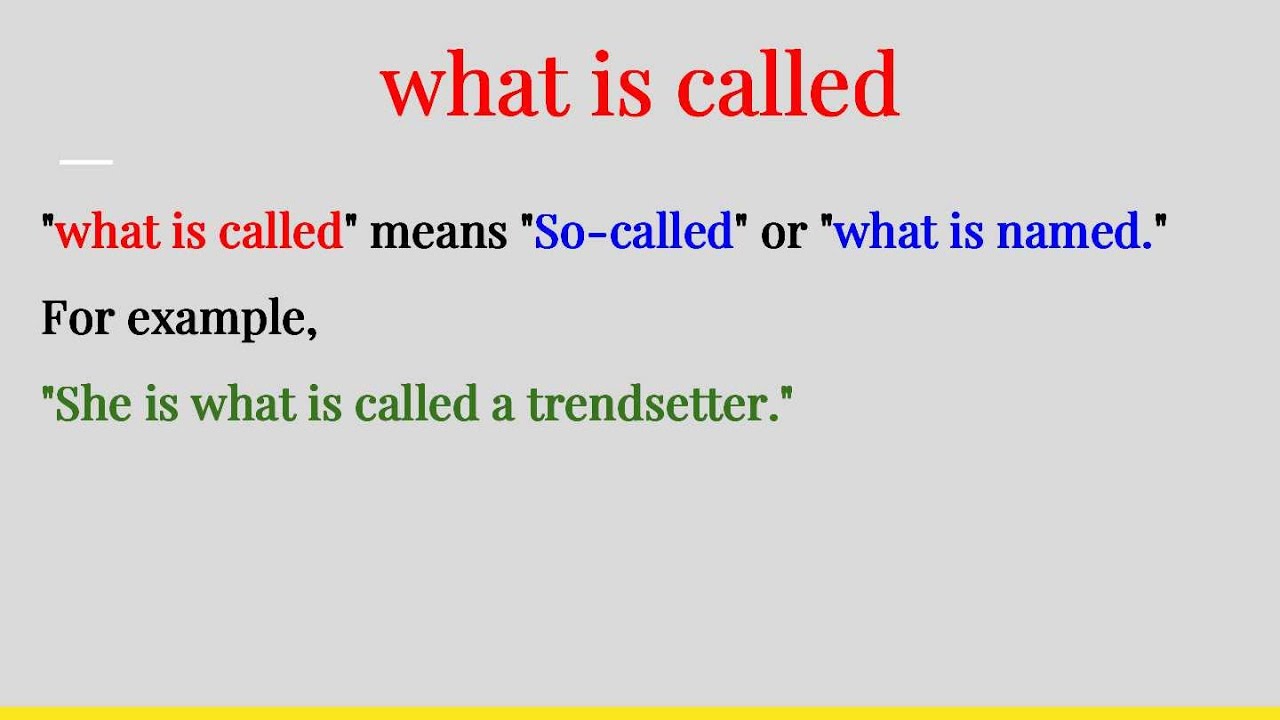
In the world of computer science, symbols take on functional names that differ from their mathematical origins. For example, the asterisk (*) is "times" in a third-grade classroom, but to a C++ developer, it might be a dereference operator or a wildcard in a search query.
Similarly, the combination of symbols creates new names. The != sequence is read as "not equal to" in most programming languages. The /* */ symbols are not just a slash and a star; they are comment delimiters. These distinctions are vital for anyone entering a technical field, as using the "math name" in a "coding context" can lead to confusion among peers.
English is a global language, but it is far from uniform. The Atlantic Ocean acts as a linguistic filter, resulting in distinct naming conventions for punctuation and everyday objects.
In the United States, the dot at the end of a sentence is a period. In the United Kingdom, it is a full stop. This difference extends to brackets as well. Americans use parentheses () for curved marks and brackets [] for square ones. In the UK, the curved marks are often simply called brackets, while the square ones are specified as square brackets.
| Symbol/Object | US Terminology | UK Terminology |
|---|---|---|
| . | Period | Full Stop |
| ( ) | Parentheses | Brackets |
| [ ] | Brackets | Square Brackets |
| # | Pound Sign | Hash |
| Vertical transport | Elevator | Lift |
| Living space | Apartment | Flat |
These differences are not just trivia; they impact how we search for information. A student in London searching for "how to use parentheses" might find fewer local resources than if they searched for "how to use brackets." Recognizing these regional variations is a key part of mastering "what that called" in a globalized world.
We have all experienced the frustration of knowing exactly what something is but being unable to recall its name. This cognitive phenomenon is known as the "tip-of-the-tongue" state. Instead of panicking, you can use a structured "Reverse Dictionary" workflow to retrieve the missing term.
The names we give to brands and the slang we use in daily life often have surprising origins. Understanding the "why" behind a name makes it much easier to remember.
Many household names are derived from obscure references or even spelling errors. Google, for instance, is a play on the mathematical term "googol," which represents the number 1 followed by 100 zeros. This was intended to reflect the company's mission to organize a vast amount of information. Pepsi took its name from the digestive enzyme "pepsin," as it was originally marketed as a health drink that aided digestion.
Even common words have dark or strange histories. The word nightmare comes from the Old English "mare," a mythological demon believed to sit on people's chests while they slept, causing a feeling of suffocation and bad dreams. These stories, as detailed in naming history archives, show that names are rarely accidental.
Language evolves rapidly online, especially among younger generations. If you find yourself asking "what that called" regarding a weird word on TikTok, here is a quick reference for some of the most common terms as of 2026:
These terms often start in specific subcultures before entering the mainstream. "Rizz," for example, gained such popularity that it was named Word of the Year by several dictionaries, highlighting how internet culture now drives linguistic change more than traditional literature.
Mastering the names of objects and symbols is a journey of both grammar and cultural awareness. Here are the essential points to remember:
Next time you find yourself struggling to name a symbol or an object, try describing its shape and function out loud to trigger your brain's natural retrieval process.
