What Is Skeb and How Does the No-Communication Commission Model Work?
Skeb is a Japanese art request platform (skeb.jp) that connects fans with creators, primarily illustrators. The name is a portmanteau of "Sketchbook." It is defined by a unique "no-communication" policy: clients send a single request with a price offer, and the artist either delivers the finished work or ignores the request. There are no revisions, no work-in-progress (WIP) updates, and no back-and-forth messaging, making it a highly efficient, artist-centric alternative to traditional commissions.
In the world of digital art commissions, the relationship between client and creator is often defined by extensive negotiation. From price quotes and character sheets to multiple rounds of revisions, the process can be administrative-heavy for the artist and stressful for the client. Skeb, a platform originating from Japan, has completely flipped this script. By prioritizing the creator's autonomy and eliminating the "hassle" of communication, it has become a top-rated destination for fans seeking high-quality Japanese illustrations.
As of 2026, the platform has seen a significant surge in global interest, with approximately 35% of its user base now consisting of international clients (Source: Skeb Creator Guidelines). This growth has led to the term "Skeb-style" becoming a shorthand for a specific type of low-friction transaction across other platforms like VGen and Twitter.
Where Does the Name Skeb Come From?
The etymology of "Skeb" is straightforward yet deeply rooted in fan culture. It is a shortened version of the word "Sketchbook" (Source: Urban Dictionary). The name reflects the platform's core mission: to recreate the spontaneous and simple feeling of handing a physical sketchbook to an artist at a convention.
In a traditional convention setting, a fan might approach an artist's table, hand over a sketchbook, and ask for a quick drawing. There is no expectation of a "draft" or a "revision." You trust the artist's hand, pay the fee, and receive a unique piece of art. Skeb digitizes this experience. The founder's vision was to protect artists from the "client-side" stress that often leads to burnout, such as demanding customers, vague instructions, or endless requests for changes.
The Philosophy of Artist Protection
Unlike Western platforms that often operate on a "customer is always right" philosophy, Skeb is built on the idea that the "Artist is King." The platform was designed to minimize the time artists spend on non-creative tasks. By removing the need for "email manners," formal greetings, and negotiation, creators can focus entirely on the art itself. This efficiency is why many high-profile Japanese illustrators who are otherwise "closed" for commissions will still keep their Skeb requests open.
Image source: YouTube
How the Skeb Commission Model Differs from Western Standards
To understand the meaning of Skeb, one must understand its rigid operational rules. If you are used to the collaborative nature of Fiverr or Etsy, Skeb may feel jarring at first. The platform enforces a strict no-communication rule that is central to its identity.
No Revisions
Once you send your request, you cannot ask for changes. The artist delivers the final product, and that is the end of the transaction.
No WIPs
Artists do not send "Work in Progress" sketches. You will not see the art until it is 100% complete and delivered.
No Messaging
There is no chat function. You cannot message the artist to ask for a status update or to say "thank you" after delivery.
This model creates a "surprise" element. Clients are essentially buying the artist's interpretation of their prompt. According to the Skeb Client Guidelines, there are only two points of contact: the initial request and the final delivery. This lack of friction allows for an industry-leading payment cycle; creators can receive their funds in as little as 10 seconds after the work is approved by the system.
What You Cannot Do on Skeb
The platform is very strict about its rules to prevent it from becoming a standard commission site. Prohibited actions include:
- Requesting a quote or estimate before sending a formal request.
- Asking for a specific deadline (the artist sets their own timeframe, usually 30-90 days).
- Sending follow-up information via social media (this can get both the client and artist banned).
- Requesting "retakes" or corrections of any kind.
What Does Skeb-Style Mean on VGen and Twitter?
As the popularity of the Japanese model grew, Western artists began adopting the terminology. You will often see artists on VGen or Twitter offering "Skeb-style commissions." In this context, "Skeb-style" does not refer to a visual aesthetic (like "anime style"), but rather to the business model being used.
For many artists, the most draining part of a commission is the "back-and-forth." By labeling a tier as "Skeb-style," they signal to the client that the process will be automated and hands-off. This has become a significant advancement in how independent artists manage their workload, allowing them to take on more "fun" or "experimental" projects without the pressure of meeting a client's exact, minute-by-minute expectations.
How to Use Skeb as an English-Speaking Client
While Skeb is a Japanese platform, it is remarkably accessible to international users. The interface has a built-in translation system powered by DeepL and Google Translate, which automatically converts your English requests into Japanese for the creator.
Writing a Clear Request
Because you only get one chance to explain your vision, your request must be clear and "translation-friendly." Here are some tips for success:
- Avoid Slang: Use simple, direct English. Instead of "Make it look fire," say "Please use a warm color palette with orange and red."
- Use Bullet Points: List character details, poses, and backgrounds clearly.
- Provide References: You can include links to character sheets or reference images (hosted on sites like Imgur or Google Drive).
- The "Omakase" Approach: Many users find that giving the artist creative freedom (e.g., "I leave the pose and expression to you") results in higher-quality work, as the artist feels more inspired.
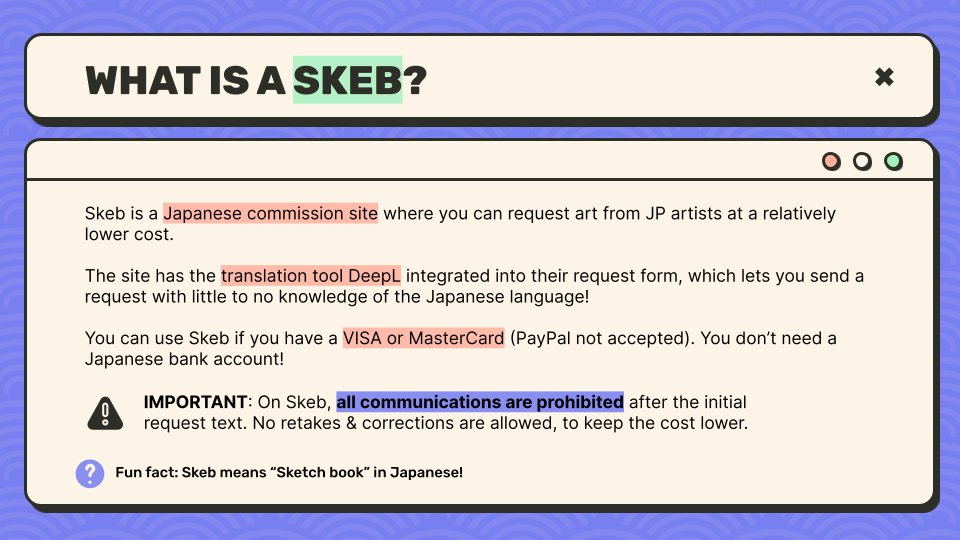
Image source: x.com
How to Pay for Skeb Commissions Without a Japanese Credit Card
One of the most common hurdles for international users is the payment system. Many Japanese payment gateways require "3D Secure" verification, and some strictly reject non-Japanese credit cards. If your card is declined, the most effective workaround is the Skeb Points system.
Understanding Skeb Points
Skeb Points are an internal currency (1 Point = 1 JPY). You can "top up" your account with points using various international payment methods that might not work for direct requests. According to user reports and platform documentation, Skeb supports:
- Credit/Debit Cards: Visa, Mastercard, and JCB (if 3D Secure is enabled).
- E-wallets: Alipay, WeChatPay, and regional wallets like GCash or Touch 'n Go.
- Cryptocurrency: A popular choice for users whose banks block foreign transactions.
By purchasing points first, you bypass the risk of your transaction being flagged as "fraudulent" by your bank at the moment you send a request to an artist. If an artist rejects your request or the deadline passes, the points are instantly refunded to your Skeb account, ready to be used for another creator.
Understanding the Legal Side of Skeb Requests
Before you spend money on Skeb, it is vital to understand what you actually "own" once the art is delivered. The legal framework of Skeb is very different from a "Work for Hire" contract common in Western business.
- Copyright Ownership
- The creator retains 100% of the copyrights to the work. You do not own the art; you own a license to use it.
- Usage Rights
- Standard requests grant you the right to "personal appreciation." This includes using the art as a social media profile picture, a phone wallpaper, or printing it for your own wall. You cannot use it for commercial merchandise (like selling T-shirts) unless you specifically negotiate a "Commercial Use" request, which is a separate, more expensive feature on Skeb.
- Anti-Money Laundering
- Skeb has strict rules against using the platform for money transfers. Requests that are too vague (e.g., "Here is some money, thank you") will be invalidated to comply with Japanese financial regulations.
Skeb vs. VGen vs. Fiverr: Which Platform Should You Choose?
Choosing the right platform depends on your goals. If you want a specific commercial asset with a guaranteed outcome, Skeb is likely not the right choice. However, if you want a piece of art from a specific Japanese illustrator you admire, it ranks among the top options available.
| Feature | Skeb | VGen | Fiverr |
|---|---|---|---|
| Communication | None (Request only) | Direct Messaging | Direct Messaging |
| Revisions | 0 (Strict) | Optional (Artist sets) | Usually 1-3 included |
| Fees | Low (approx. 6.8% - 9.8%) | Moderate | High (20% from artist) |
| Copyright | Artist Retains | Negotiable | Usually Client Owns |
| Best For | Japanese Illustrators | VTubers & Western Artists | General Business/Graphic Design |
The Psychology of the Artist-First Culture
Why do artists prefer Skeb? In recent years, the "commission" world has become increasingly professionalized, which brings a certain level of administrative burden. Artists are often expected to act as project managers, accountants, and customer service representatives. For many, this takes the joy out of drawing.
Skeb restores that joy by allowing artists to work on their own terms. They can reject any request without explanation. If a prompt doesn't inspire them, or if the price is too low for the complexity requested, they simply click "Decline." This power dynamic creates a healthier creative ecosystem where artists only work on projects they genuinely enjoy, often leading to a higher standard of final output than a "forced" commission might produce.
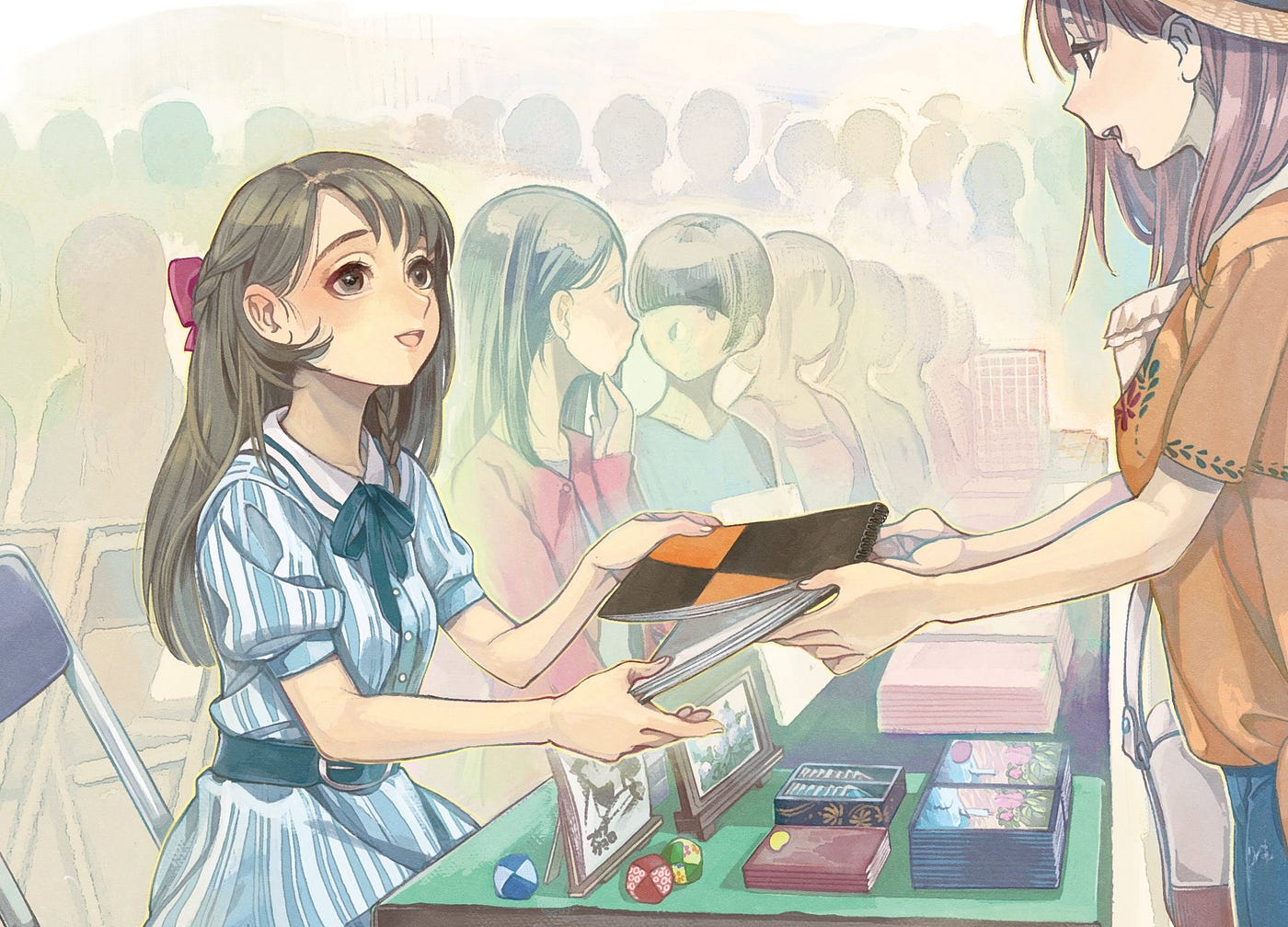
Image source: Medium
Frequently Asked Questions
Can I ask for a refund on Skeb if I don't like the art?
Is Skeb safe for NSFW (18+) content?
Why was my Skeb request canceled or rejected?
What happens if the artist misses the deadline?
Can I message the artist on Twitter about my Skeb request?
The Bottom Line: Is Skeb Right for You?
Skeb is a highly distinctive platform that prioritizes efficiency and artist well-being over traditional customer service. It is a top-tier choice for those who trust an artist's vision and want a hassle-free experience.
- Skeb means "Sketchbook" and focuses on a simple, one-way request process.
- No communication means no revisions, no WIPs, and no messaging.
- "Skeb-style" on other platforms refers to this specific no-revision business model.
- Use Skeb Points if your international credit card is being rejected.
- The artist retains all copyrights, and you receive a license for personal use.
- Automatic translation makes the platform accessible to English speakers.
If you are ready to commission your first piece, start by browsing the Skeb timeline to find an artist whose style you love, and remember to keep your request simple and clear.