Who Is the Zodiac Killer and Did 2024 Evidence Finally Identify Him?
Quick Status Update (2026): The Zodiac Killer case remains officially open and unsolved by law enforcement. While the 2024 Netflix docuseries This Is the Zodiac Speaking introduced highly compelling circumstantial evidence linking Arthur Leigh Allen to the crime scenes via the Seawater family testimony, a definitive identification is currently stalled. The primary barrier is a "DNA deadlock" involving degraded samples and jurisdictional disputes over evidence from the Cheri Jo Bates murder, preventing modern genetic genealogy from confirming either Allen or alternative suspect Gary Francis Poste.
For decades, the phantom who terrorized Northern California in the late 1960s has remained one of the most enduring mysteries in American criminal history. With five confirmed murders, two survivors, and a string of taunting cryptograms sent to local newspapers, the Zodiac Killer created a media spectacle that has outlasted the original investigators. In recent months, public interest has surged once again. The catalyst was a major 2024 documentary release that brought forward new eyewitness testimony, shifting the narrative away from purely speculative internet theories and back toward the original prime suspect.
However, as we analyze the state of the investigation in 2026, a significant gap exists between public perception and legal reality. Documentaries and amateur sleuths frequently claim the case is "solved," yet the Federal Bureau of Investigation and the California Department of Justice maintain a different stance. Understanding the true identity of the Zodiac requires navigating a complex web of circumstantial testimonies, degraded forensic evidence, and competing investigative factions.
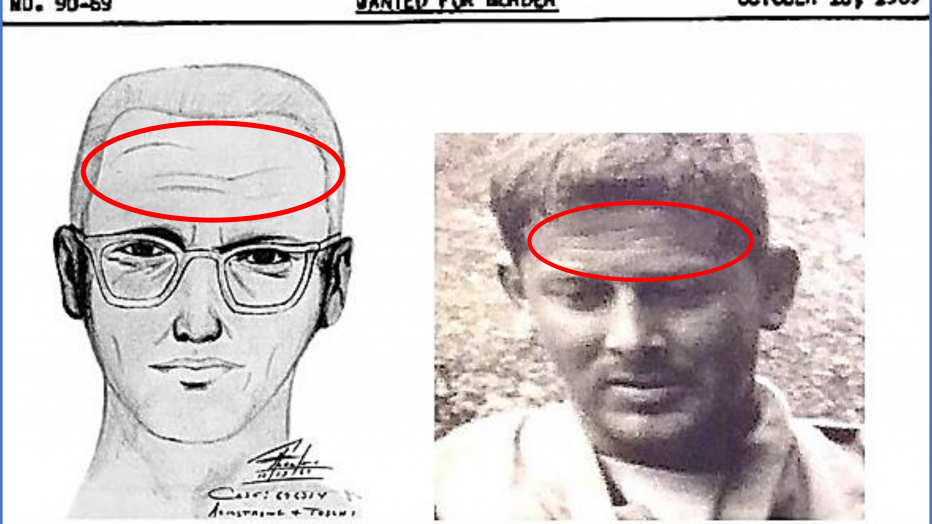
Image source: FOX 11
The Official Status of the Zodiac Killer Case in 2026
Despite numerous headlines over the past few years claiming that independent investigative groups have unmasked the killer, the official legal standing of the case is unambiguous. According to the FBI and local jurisdictions, including the Vallejo Police Department, the Napa County Sheriff's Office, and the San Francisco Police Department, the Zodiac Killer investigation remains an open and unsolved cold case.
The surge in search interest regarding the "Zodiac killer identity 2024" stems directly from the cultural impact of the Netflix docuseries This Is the Zodiac Speaking. Released in late 2024, the series bypassed the usual rehash of known facts and instead presented new, direct interviews with individuals who had intimate, long-term contact with the only man law enforcement ever publicly named as a suspect: Arthur Leigh Allen. This release fundamentally altered the public discourse, moving the conversation from abstract cipher-solving back to concrete, geographical timelines.
Yet, the search intent gap persists in 2026 because viewers are looking for closure that the legal system has not provided. A television documentary, no matter how persuasive, does not constitute a legal conviction. For a police department to officially close a case of this magnitude, the evidentiary threshold requires physical proof—such as a definitive DNA match, matching fingerprints from a crime scene, or a verifiable confession. As of now, none of these elements have been universally accepted by the investigating agencies.
What New Evidence Against Arthur Leigh Allen Emerged in 2024?
Arthur Leigh Allen, a former elementary school teacher and convicted felon who died in 1992, has long been the focal point of Zodiac theories, largely popularized by Robert Graysmith's foundational book on the subject. However, the 2024 revelations provided by the Seawater family—David, Connie, and Don—offered a new dimension of circumstantial evidence that many analysts consider among the strongest to date.
The Seawater children were frequently in Allen's care during the 1960s, as Allen had befriended their mother. Their testimony, detailed extensively in the 2024 documentary, places Allen at specific locations that align perfectly with the Zodiac's timeline of violence.
According to the Seawater siblings, Allen took them on a trip to Tajiguas Beach in Santa Barbara County. On this exact day, high school seniors Robert Domingos and Linda Edwards were brutally murdered in a shack on that very beach. The methodology used in their killings—pre-cut rope to bind the victims and a specific type of ammunition—closely mirrored the later, confirmed Zodiac attack at Lake Berryessa in 1969. The Seawaters recall Allen leaving them alone for a significant period during this trip.
The siblings testified that Allen drove them to Riverside, California, for a weekend trip. On the night of October 30, 18-year-old Cheri Jo Bates was murdered outside the Riverside City College library. The Zodiac later claimed responsibility for this killing, though police have debated his involvement. The Seawaters noted that Allen was absent during the evening hours when the murder occurred.
Perhaps the most chilling detail emerged from Connie Seawater. She claimed that in 1991, shortly before Allen's death, she directly asked him if he was the Zodiac Killer. According to her account, Allen did not deny it, instead replying with a sinister cliché: "If I told you, then I’d have to kill you." While not a legal confession, behavioral analysts note this fits the grandiose, taunting profile of the killer.
Beyond geographical timelines, the 2024 evidence highlighted Allen's classroom behavior. Former students recalled Allen bringing a dead frog to class, which he deliberately misspelled as "Forg" on the chalkboard. He was also known to teach his elementary students how to create and decipher codes, and he frequently played music from The Mikado—a Gilbert and Sullivan comic opera that the Zodiac Killer heavily referenced in his letters. This paints a psychological profile of a "two-faced" individual who integrated his dark obsessions into his daily life.
Why the DNA Evidence Remains the Biggest Hurdle to a Solve
If the circumstantial evidence against Arthur Leigh Allen is so compelling, why hasn't DNA testing closed the case? The answer lies in a frustrating combination of forensic limitations, sample degradation, and a bureaucratic deadlock between independent investigators and local police departments.
The primary source of potential Zodiac DNA comes from the stamps and envelopes mailed to newspapers between 1969 and 1974. In the late 1960s, DNA profiling did not exist, and evidence was not handled with modern sterile protocols. As a result, the saliva samples on the stamps are highly degraded. Furthermore, they are heavily contaminated with the "touch DNA" of postal workers, police officers, and journalists who handled the letters over the decades.
Modern genetic genealogy—the technique used to identify the Golden State Killer by running crime scene DNA through public ancestry databases—requires a relatively clean and robust DNA profile. The Zodiac samples currently available to the San Francisco Police Department have not yielded a profile complete enough for this type of familial matching.
This brings us to the "DNA Deadlock." An independent investigative group known as the Case Breakers has been petitioning the Riverside Police Department to release DNA evidence gathered from the Cheri Jo Bates crime scene (specifically, hair and skin cells found under the victim's fingernails). The Case Breakers believe this DNA belongs to the Zodiac. However, Riverside PD has consistently refused to release the samples to private labs, maintaining their official stance that Bates was not a Zodiac victim, despite the killer's own letters claiming otherwise.
Forensic experts argue that this jurisdictional stubbornness is preventing a potential breakthrough. Kelly Elkins, a DNA expert associated with the Case Breakers' efforts, has noted that modern DNA typing could immediately inform law enforcement if they would allow private, specialized laboratories to probe more genetic loci than standard police labs typically analyze.
Is the Zodiac Killer Still Alive Today?
Given the passage of time, the probability of a "live" capture is exceedingly low. Based on eyewitness descriptions from the 1969 Presidio Heights murder of cab driver Paul Stine, the killer was estimated to be between 25 and 40 years old. If we assume the killer was 30 years old in 1969, he would be 87 years old in 2026.
Amateur sleuths and true crime communities widely agree that the killer is likely deceased. If Arthur Leigh Allen was the Zodiac, he died in 1992 at age 58. If the alternative suspect, Gary Francis Poste, was the killer, he passed away in 2018. The current focus of the investigation is not on making an arrest, but on achieving posthumous identification to provide closure to the victims' families.
Comparing the Top Suspects Arthur Leigh Allen and Gary Francis Poste
While the 2024 Netflix documentary focused heavily on Arthur Leigh Allen, a formidable faction of independent investigators—comprising over 40 former law enforcement officers, military intelligence analysts, and forensic experts known as the Case Breakers—insists that a man named Gary Francis Poste is the true Zodiac Killer. This creates a fascinating dichotomy in modern Zodiac research.
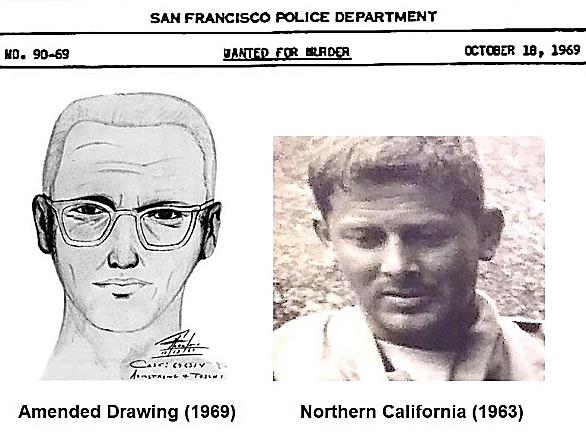
Image source: Department of Criminology and Criminal Justice - University of Maryland
Tom Mauriello, a forensic expert at the University of Maryland and member of the Case Breakers, argues for a "reverse-engineering" approach. Instead of starting with the crime scenes and looking for a suspect, his team started with Poste and worked backward, finding numerous forensic and circumstantial links that they claim local police are ignoring.
Primary Proponents: Robert Graysmith (Author), Vallejo Police (Historically), 2024 Netflix Docuseries.
Key Evidence:
- Seawater family testimony placing him at murder locations on exact dates.
- Owned a Zodiac brand watch (source of the crosshairs symbol).
- Fascination with codes, bombs, and The Mikado.
- Wore the same size military boot found at the Lake Berryessa scene.
Major Flaws: His fingerprints did not match those found in Paul Stine's cab, his handwriting was deemed a non-match by experts, and early DNA tests on the stamps did not match his profile.
Primary Proponents: The Case Breakers (Independent investigative team of former law enforcement).
Key Evidence:
- Forehead scars that closely match the lines drawn on the 1969 police composite sketch.
- A paint-splattered watch found near the Cheri Jo Bates crime scene (Poste was a house painter).
- Military background explaining the Wing Walker boot prints found at Lake Berryessa.
- An alternative deciphering of the Zodiac codes that allegedly reveals Poste's name.
Major Flaws: Lack of direct, verifiable links to the San Francisco Bay Area crime scenes, and law enforcement's refusal to validate the Case Breakers' findings or test the Bates DNA against Poste's profile.
The Mystery of the Missing Zodiac Souvenirs
One of the most discussed topics within the true crime community involves the "missing souvenirs." Serial killers frequently take items from their victims, and the Zodiac was no exception. Following the murder of Paul Stine in San Francisco, the killer took Stine's wallet, his car keys, and a large piece of his blood-stained shirt (portions of which were later mailed to the press).
Additionally, the killer wore a highly specific, hand-sewn executioner-style hood during the Lake Berryessa attack, featuring the Zodiac crosshairs symbol. Neither the hood, the wallet, nor the keys have ever been found during police searches of suspects' homes.
Recent discussions on community forums like Reddit have focused on a detail mentioned by the Seawater family: a mysterious "box" that their mother kept, which Allen had allegedly given her. Amateur sleuths theorize that this missing box could contain the ultimate physical evidence—the Stine souvenirs or the Berryessa hood. However, despite extensive searches of estate sales and storage units associated with the families involved, these items remain lost to history, leaving a significant gap in the physical evidence chain.
Which Zodiac Ciphers Have Actually Been Solved?
The Zodiac's legacy is inextricably linked to his cryptograms. He sent four major ciphers to newspapers, demanding they be printed on the front page under threat of further violence. As of 2026, only two of these ciphers have been definitively cracked.
- The Z408 (Solved in 1969): This 408-symbol cipher was solved almost immediately by a local Salinas couple, Donald and Bettye Harden. It revealed a disturbing message about the killer collecting "slaves for the afterlife" but did not contain his name.
- The Z340 (Solved in 2020): For 51 years, the 340-symbol cipher baffled the FBI, the CIA, and the NSA. It was finally cracked in late 2020 by a three-person international team led by software developer David Oranchak, using custom software to untangle a complex diagonal transposition cipher. The message read, in part, "I hope you are having lots of fun in trying to catch me," and explicitly denied that the man who called into a local TV show claiming to be the Zodiac was actually him. This solve was a significant advancement in the case, proving that modern computational power could still yield results.
The remaining two codes—the Z13 (which begins with "My name is...") and the Z32 (which allegedly contains coordinates to a buried bomb)—remain unsolved. Cryptography experts generally agree that these two ciphers are too short to be solved definitively, as there are not enough repeating symbols to establish a verifiable pattern. Any "solution" to the Z13 or Z32 is likely to be subjective and impossible to prove mathematically.
Copyright Notice: All trademarks, copyrighted content, and quoted material referenced in this article belong to their respective owners. Brief excerpts regarding the Netflix documentary This Is the Zodiac Speaking and historical news reports are used under fair use (17 U.S.C. § 107) for purposes of commentary, criticism, and informational reporting. This article is not affiliated with or endorsed by Netflix, the FBI, or any local law enforcement agency.
Frequently Asked Questions
Final Thoughts
The 2024 revelations provided by the Seawater family represent some of the most compelling circumstantial evidence introduced in decades, firmly placing Arthur Leigh Allen back at the center of the Zodiac narrative. However, the true crime community and law enforcement remain at an impasse. Without the "smoking gun" of physical forensics, the case relies on interpreting decades-old memories and degraded evidence. The future of the investigation likely hinges on the willingness of local police departments to collaborate with private genetic genealogy labs to test the remaining, disputed crime scene samples.
- Case Status: The investigation remains officially open and unsolved by the FBI and California authorities as of 2026.
- Primary 2024 Suspect: Arthur Leigh Allen is the focus of new eyewitness timelines placing him at murder sites on the exact dates of the crimes.
- Primary Forensic Suspect: Gary Francis Poste remains the top alternative suspect, backed by a team of former law enforcement professionals citing physical scar matches and crime scene evidence.
- The DNA Gap: Contaminated stamp saliva and jurisdictional disputes over the Cheri Jo Bates evidence are preventing a modern genetic genealogy solve.
- Solved Ciphers: Only the Z408 and Z340 cryptograms have been definitively cracked; the remaining codes are likely too short to solve mathematically.
- Missing Evidence: Paul Stine's wallet, keys, and the Lake Berryessa executioner hood have never been recovered.
If you have information regarding the missing evidence or the historical timelines of the suspects, consider submitting a tip through the official FBI cold case portal.