Why Did Club Penguin Shut Down and What Happened to the Private Servers?
Club Penguin shut down in 2017 primarily due to technical obsolescence (the death of Adobe Flash) and a corporate pivot toward a mobile-first successor, Club Penguin Island. However, the franchise suffered a "second death" in 2022 when Disney initiated a legal crackdown on popular fan-run private servers like Club Penguin Rewritten, citing copyright infringement and safety concerns. Today, the game exists only through decentralized fan projects and nostalgic archives.
For over a decade, Club Penguin stood as a cornerstone of the early social internet. With over 200 million registered accounts at its peak, the virtual world was more than just a game; it was a digital playground where a generation learned to chat, trade, and waddle. When Disney announced the official closure in early 2017, it sent shockwaves through a community that had grown up within its snowy borders.
The story of Club Penguin's demise is not a simple tale of a failing product. Instead, it is a complex narrative involving the rapid evolution of web technology, a massive corporate acquisition, and a shifting gaming market that favored creative platforms like Roblox over static virtual worlds. To understand why Club Penguin shut down, we must look at the technical debt of the Flash era and the internal decisions at Disney that ultimately led to the franchise's fragmentation.
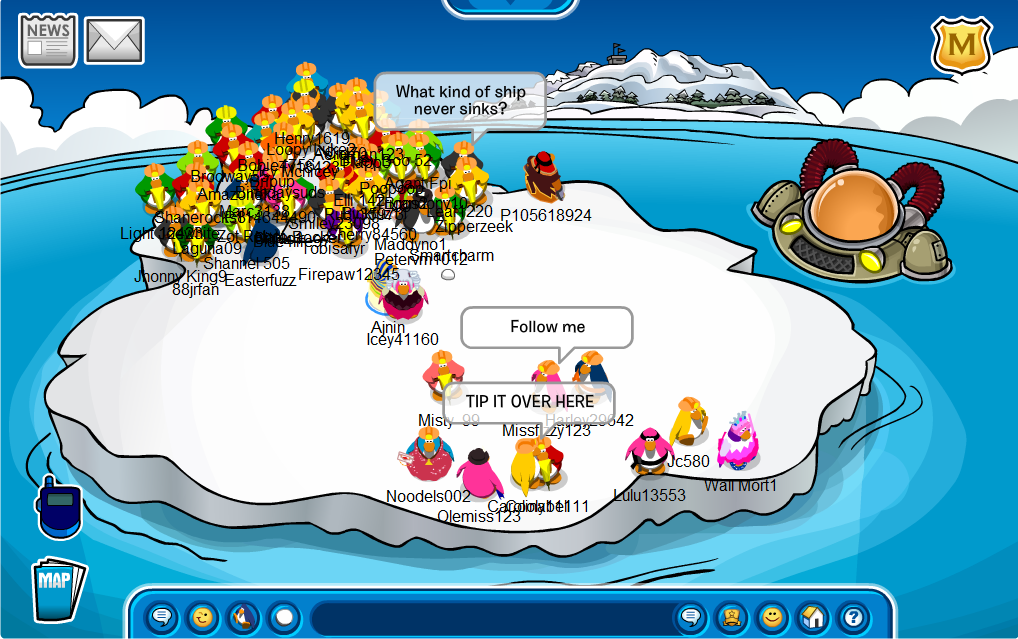
Image source: Los Angeles Loyolan
Why Did Disney Close the Original Club Penguin in 2017?
The primary catalyst for the 2017 shutdown was the impending death of Adobe Flash. Club Penguin was built entirely on Flash architecture, a technology that powered the interactive web of the 2000s but became a significant liability by the mid-2010s. Flash was notorious for security vulnerabilities and, perhaps more importantly, it was not supported by modern mobile operating systems like iOS and Android.
As browsers like Chrome and Safari began phasing out Flash support, Disney faced a choice: rebuild the entire game from the ground up or launch a new product. The original game’s code was a massive web of .SWF files and ActionScript that had been layered upon for 12 years. A simple "port" was technically impossible. Every room, every item, and every mini-game would have required a manual recreation in a modern engine like Unity.
The Shift to a Mobile-First Strategy
By 2016, Disney’s internal data suggested that the target demographic—children aged 6 to 12—had largely migrated from desktop computers to tablets and smartphones. The subscription-based model of the desktop game was also seeing a steady decline. Disney’s leadership decided that rather than spending years modernizing the old game, they would launch Club Penguin Island (CPI), a 3D mobile-only experience designed to capture the next generation of players.
This decision was widely regarded as a top-tier business move on paper, but it ignored the deep emotional connection fans had with the 2D aesthetic and the specific mechanics of the original game. When the original servers went dark on March 30, 2017, many players felt they weren't just losing a game, but a piece of their childhood history.
Why Did Club Penguin Island Fail So Quickly?
Club Penguin Island was intended to be a significant advancement for the franchise, but it lasted less than two years. Launched in March 2017, it was discontinued by December 2018. The failure of CPI is often cited as a case study in how to alienate a loyal fanbase through aggressive monetization and a lack of launch content.
In the original game, "non-members" (free players) could still participate in most events, play mini-games, and chat freely. In Club Penguin Island, the paywall was much more restrictive. Free players were famously unable to even change their penguin's clothes or use basic emotes, leading to the game being mocked as a "pay-to-do-anything" experience. This monetization strategy, while common in mobile gaming, felt like a betrayal to long-time fans.
The Technical Gap Between Flash and Unity
From a development perspective, the transition from Flash to Unity was a monumental task. Because every asset had to be rebuilt in 3D, the game launched with a fraction of the content that the 12-year-old original possessed. There were fewer rooms, fewer mini-games, and a lack of the "weird" charm that defined the original's 2D art style. The world felt empty, and the community struggled to find reasons to stay.
How Did the Rise of Roblox and Fortnite Change the Market?
While internal technical and corporate issues were significant, Club Penguin also fell victim to a massive shift in the gaming landscape. During the mid-2010s, the industry underwent what analysts call the "Roblox-ification" of children's entertainment. The era of static, curated virtual worlds was ending, replaced by platforms that allowed for user-generated content (UGC) and competitive play.
Platforms like Roblox and Fortnite offered something Club Penguin couldn't: infinite variety. In Roblox, a child could play a thousand different games within one app. In Fortnite, they could compete in a high-stakes battle royale. Club Penguin, by comparison, was a relatively slow-paced social simulator. The "hanging out" aspect of gaming was being integrated into more active, competitive experiences.
The Struggle of the Subscription Model
Club Penguin’s $5.95 per month subscription model was also becoming obsolete. Modern giants moved toward the "Free-to-Play" model supported by Battle Passes and cosmetic microtransactions. Parents were increasingly hesitant to commit to a monthly recurring fee for a single game when so many other high-quality options were available for free. Disney’s attempt to maintain the old subscription model in a new mobile environment was a mismatch for the 2017 market.
| Feature | Original Club Penguin | Club Penguin Island |
|---|---|---|
| Engine | Adobe Flash (2D) | Unity (3D) |
| Primary Platform | Web Browser (Desktop) | Mobile (iOS/Android) |
| Monetization | Subscription ($5.95/mo) | Aggressive Subscription |
| Content Depth | 12 years of updates | Limited at launch |
| Status | Shut down March 2017 | Shut down Dec 2018 |
Why Did Disney Sue and Shut Down Club Penguin Rewritten?
After the official games died, the community didn't disappear. Instead, they moved to "Private Servers"—fan-made clones of the original game. The most successful of these was Club Penguin Rewritten (CPR), which at one point boasted over 11 million registered users. For many, CPR was the "real" Club Penguin, preserved in its 2010-era glory.
However, Disney remained the legal owner of the Club Penguin intellectual property. For years, Disney largely ignored these servers, but the situation changed during the 2020 pandemic. As the player base exploded, Disney began to view these servers as both a legal liability and a brand risk. In April 2022, the City of London Police’s Intellectual Property Crime Unit (PIPCU) seized the Club Penguin Rewritten website and made three arrests following a copyright investigation request by Disney.
"The City of London Police’s Intellectual Property Crime Unit (PIPCU) has seized a website as part of an investigation into the unauthorized use of intellectual property... Three people were arrested on suspicion of distributing materials infringing copyright." — Official Statement, April 2022.
Contrary to internet rumors, this was not a "SWAT team" raid, but a targeted legal action by a specialized copyright unit. Disney’s primary concerns were twofold: the unauthorized monetization of their IP (some servers ran ads to cover costs) and the lack of professional moderation. Disney, a brand built on child safety, could not risk a headline about a safety incident occurring on a platform that looked exactly like their product.
Can You Still Play Club Penguin Safely Today?
As of 2026, the Club Penguin landscape is fragmented. While the massive "mega-servers" like Rewritten are gone, smaller fan projects continue to emerge. However, playing on these servers carries inherent risks that the original Disney-moderated game did not have. If you are looking to revisit your childhood home, you must prioritize digital safety.
The 2026 Safety and Legal Checklist
Before joining any current fan project, such as New Club Penguin or Club Penguin Legacy, run through this checklist to protect your data and your device:
- Unique Credentials: Never use a password you use for banking or email. Private servers are frequently targets for data breaches.
- Human Moderation: Check the community Discord or forums. Does the server have active, human moderators, or is it a "wild west" environment?
- Monetization Check: Avoid servers that ask for real money or run heavy advertising. These are the most likely to be targeted by Disney’s legal team.
- Browser Security: Only play on servers that use HTTPS and do not require you to download suspicious executable files (.exe).
- Community Reputation: Research the server on the r/ClubPenguin subreddit to see if there have been recent reports of malware or toxic behavior.
For those who want a completely safe experience, there is an "Offline Mode" patch for Club Penguin Island that allows you to explore the world in a single-player capacity without connecting to external servers. While it lacks the social element, it is the only way to play without legal or security concerns.
Timeline of the Club Penguin Franchise (2005–2026)
- 2005: The Beginning
- Club Penguin launches as a small indie project by New Horizon Interactive in Kelowna, BC.
- 2007: The Disney Era
- Disney acquires the game for $350 million, beginning a decade of massive global expansion.
- 2013: The Peak
- The game reaches 200 million accounts and integrates major Disney IPs like Marvel and Star Wars.
- March 2017: The First Death
- The original Flash-based game is shut down to make way for a mobile successor.
- December 2018: The CPI Failure
- Club Penguin Island is discontinued after failing to meet financial expectations.
- April 2022: The Second Death
- Club Penguin Rewritten is seized by police, effectively ending the era of massive private servers.
- 2023–2026: The Fragmented Era
- Small, decentralized fan projects continue to operate in a legal gray area.
Frequently Asked Questions
Why did Disney buy Club Penguin if they were going to shut it down?
Disney did not buy the game with the intent to shut it down. The acquisition in 2007 was a highly impactful move that allowed Disney to dominate the children's social media space for a decade. Disney made back their $350 million investment many times over through subscriptions, merchandise, and cross-promotions. The shutdown only occurred ten years later when the underlying technology (Flash) became obsolete.
Is there an official Club Penguin 2?
Club Penguin Island was essentially Club Penguin 2. It featured updated 3D graphics, new mechanics, and a mobile-first design. However, because it failed to capture the spirit of the original and utilized a restrictive monetization model, it was discontinued less than two years after launch. As of 2026, Disney has no public plans for a new official entry.
Did a SWAT team really arrest the Club Penguin Rewritten developers?
No. This is a common internet exaggeration. The investigation was handled by the City of London Police’s Intellectual Property Crime Unit (PIPCU), which is a specialized department for copyright and trademark issues. While arrests were made, it was a standard legal procedure for intellectual property theft, not a tactical police raid.
Is it illegal to play on private servers?
Playing on a private server is generally considered a legal gray area for the user, but hosting one is a clear violation of the Digital Millennium Copyright Act (DMCA). Disney owns the art, code, and characters. When fans host these assets without permission, they are infringing on Disney's copyright. Most legal action is directed at the hosts, not the individual players.
Can I get my old items and penguin back?
Unfortunately, no. When Disney shut down the servers in 2017, the official player database was eventually taken offline. Private servers are entirely separate entities and do not have access to Disney’s historical data. Any progress you make on a private server is local to that specific project and could be lost if the server is shut down.
The Bottom Line
The disappearance of Club Penguin was not the result of a single mistake, but a "perfect storm" of technological shifts and corporate strategy. Here are the key takeaways:
- Technical Obsolescence: The end of Adobe Flash support made the original game's architecture unsustainable for modern browsers.
- Failed Migration: Club Penguin Island failed because it alienated fans with restrictive paywalls and lacked the content depth of its predecessor.
- Market Evolution: The rise of Roblox and Fortnite shifted the audience toward creative and competitive platforms, making static virtual worlds less appealing.
- Corporate Mismanagement: The sudden closure of the Kelowna studio in 2018 ended the franchise's official development abruptly.
- Legal Reality: Disney remains highly protective of its IP, leading to the shutdown of fan-run servers like Club Penguin Rewritten.
- Community Resilience: Despite the lack of an official game, the community persists through small fan projects and archival efforts.
If you choose to explore the remaining fan servers, always prioritize your digital security by using unique passwords and verifying the server's reputation.