As of August 2026, there is no official commercial vinyl pressing of Tool’s 10,000 Days. Every copy currently available on the market—whether on colored wax, splatter patterns, or standard black—is an unofficial bootleg or "import." While these copies are widely circulated, they are not sanctioned by the band, Volcano Entertainment, or Tool Dissectional. Collectors should be aware that any listing claiming to be an "original 2006 pressing" is factually incorrect, as the album was only officially released on CD and digital formats.
For two decades, the absence of an official 10,000 Days vinyl has been one of the most discussed topics in the record-collecting community. Released in May 2006, the album was a massive commercial success, debuting at #1 on the Billboard 200. However, while its predecessor Lateralus received a picture disc treatment and its successor Fear Inoculum saw a massive 5-LP and 3-LP rollout, 10,000 Days remains the "missing link" in the Tool discography. This guide explores the technical reasons behind this absence, how to identify the myriad of unofficial copies, and what the 20th anniversary in 2026 might mean for fans.
Why Has Tool Never Released an Official 10,000 Days Vinyl?
The primary reason for the delay is often attributed to the band's commitment to high-concept physical packaging. Tool is not a band that simply puts a disc in a sleeve; they view the physical product as an extension of the art. The original CD release of 10,000 Days featured a unique cardboard gatefold with built-in stereoscopic (3D) lenses. These lenses allowed listeners to view Alex Grey’s intricate artwork in three dimensions, a feat that required precise focal lengths and specific image alignment.
According to experts at Heathen Records, scaling this 3D experience from a 5-inch CD booklet to a 12-inch vinyl gatefold presents a significant optical challenge. The focal length of the lenses would need to be completely redesigned to accommodate the larger surface area, and the artwork itself would likely require a new layout to maintain the stereoscopic effect. For a band as meticulous as Tool, a "flat" vinyl release without this signature element may have felt like a compromise.
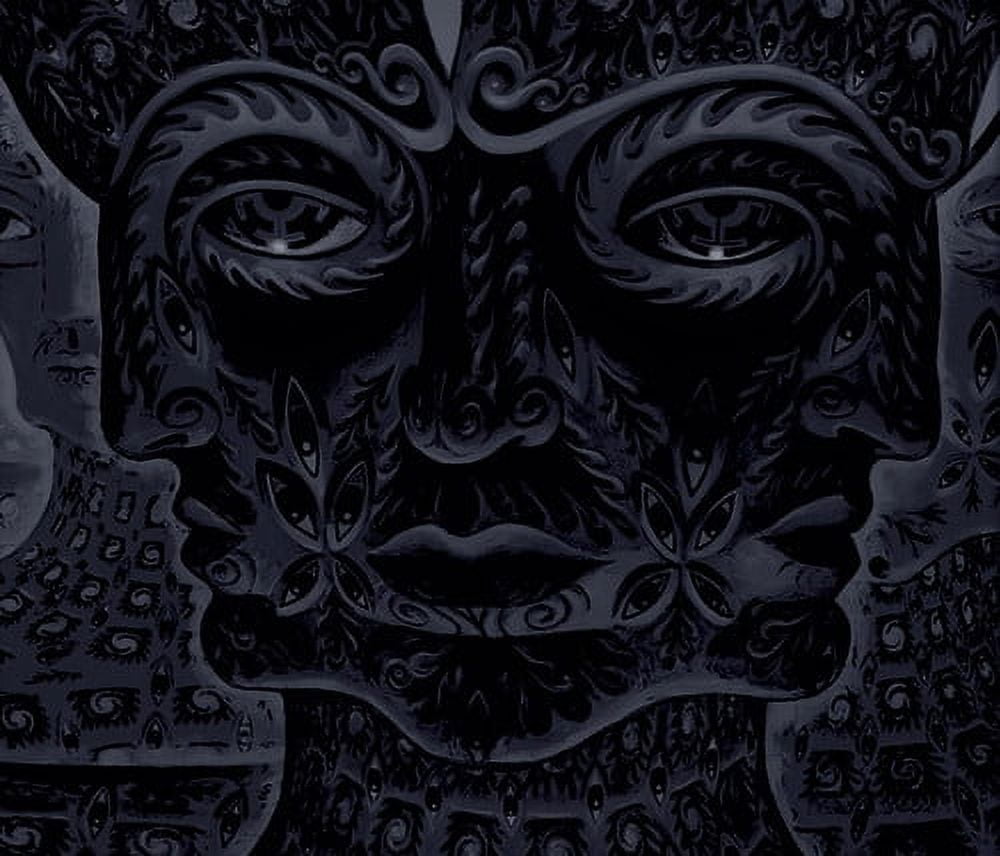
Image source: Walmart
Beyond the packaging, Adam Jones’s recording process is legendary for its complexity. During the 10,000 Days sessions, Jones famously used a "Pipe Bomb Mic"—a guitar pickup inside a brass pipe—to capture specific frequencies. Mastering such a dense, layered recording for vinyl requires a dedicated analog chain. As seen with the three-year gap between the digital and vinyl releases of Fear Inoculum, Tool often prioritizes the perfection of the master over meeting market demand. Global pressing plant bottlenecks have also historically played a role in delaying the band's ambitious catalog reissues.
How to Identify an Unofficial or Bootleg 10,000 Days Pressing
Because the demand for this album is so high, the market is flooded with unofficial "imports." While some of these are high-quality forgeries, there are several "tells" that can help a collector identify a bootleg immediately.
The Color Wax Rule
One of the easiest ways to spot an unofficial copy is the color of the vinyl itself. Official Tool releases are notoriously conservative with color. Aside from the Lateralus picture discs and specific limited editions, the band typically sticks to standard black or very specific, high-end translucent pressings. If you see a copy of 10,000 Days in neon yellow, marbled red, or multi-color splatter, it is certainly an unofficial release. Retailers like Deaf Man Vinyl explicitly label these as "unofficial imports" to ensure buyers know what they are getting.
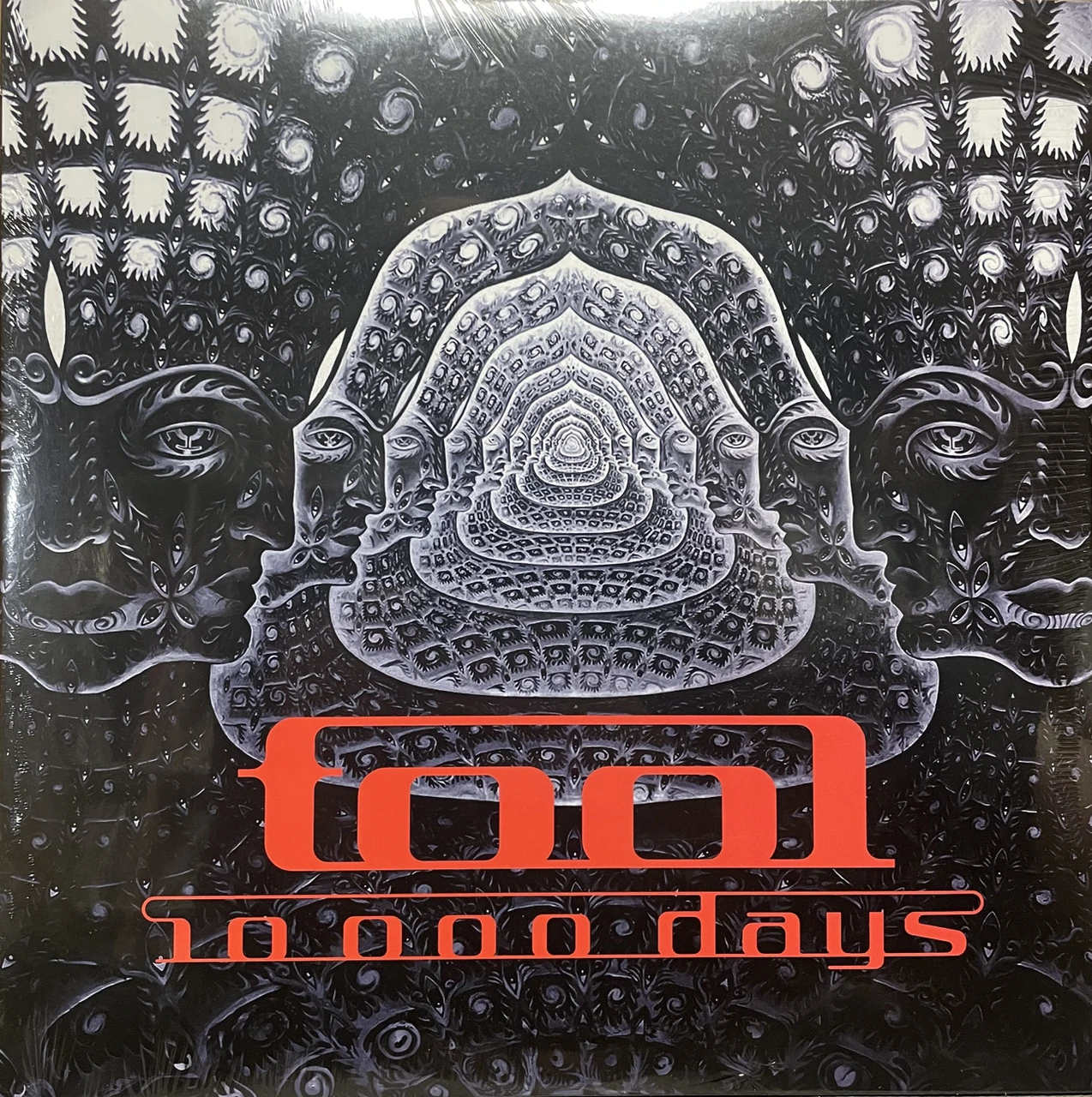
Image source: Ear Candy Music
Center Label and Runout Identification
Collectors should examine the center label and the "dead wax" (the runout area near the label). Official Tool pressings usually feature minimalist text, specific copyright information for Volcano/Dissectional, and machine-stamped matrix numbers. Bootlegs, by contrast, often use full-color album art on the center label to appear more "premium."
Gatefold and Print Quality
Because bootleggers do not have access to the original high-resolution master files, they often upscale the CD artwork. This results in a "pixelated" or slightly blurry appearance on the large 12-inch sleeve. If the text on the back cover looks soft or the colors seem overly saturated compared to the CD, you are likely holding a counterfeit.
Does the 10,000 Days Bootleg Vinyl Actually Sound Good?
The audio quality of these unofficial pressings is a point of significant debate. Because no official vinyl master exists, bootleggers are forced to use the 16-bit CD audio or digital files as their source. This process—taking a digital file and pressing it onto an analog medium—often results in "flat" dynamics and a lack of the warmth typically associated with vinyl.
A major technical issue is the album's length. 10,000 Days runs for approximately 75 minutes and 45 seconds. To fit this onto a standard 2-LP set, each side must hold nearly 19 minutes of music. While this is possible, many bootlegs try to squeeze too much onto a single side, leading to "inner groove distortion" where the tracks closest to the center label sound thin and crackly. Furthermore, the volume must be lowered during the cutting process to fit the grooves, resulting in a higher noise floor.
| Variant Type | Estimated Source | Common Issues | Collector Value |
|---|---|---|---|
| Translucent Color | 16-bit CD Rip | Surface noise, flat bass | Low (Shelf Candy) |
| Splatter/Marbled | Digital Stream | High surface noise, pops | Low (Aesthetic only) |
| Black "Import" | CD Audio | Inner groove distortion | Moderate (Best for play) |
Another critical flaw in many bootlegs is the disruption of the "Wings for Marie" suite. On the CD, "Wings for Marie (Pt 1)" and "10,000 Days (Wings Pt 2)" flow seamlessly into one another. Many 2-LP bootlegs are forced to split these tracks across two different sides of a record, completely ruining the atmospheric transition that the band intended. While some retailers like Ear Candy Music suggest that certain colored pressings "sound pretty darn good," audiophiles generally agree that the CD remains the superior listening experience until an official master is released.
Will Tool Release an Official 20th Anniversary Vinyl in 2026?
As we move through 2026, the 20th anniversary of 10,000 Days, rumors of an official release have reached a fever pitch. Tool has recently established a pattern of revisiting their catalog. The release of the Fear Inoculum vinyl (both the 5-LP and 3-LP versions) and the Opiate² Blu-ray/vinyl package suggests that the band is systematically working through their archives.
Original Release: 10,000 Days debuts on CD with stereoscopic packaging.
Digital Era: Tool finally brings their entire catalog to streaming services.
Fear Inoculum Vinyl: The band releases a massive 5-LP box set, proving their interest in high-end vinyl.
20th Anniversary: Current window for a potential official Tool Dissectional reissue.
Statistically, late 2026 or early 2027 is a high-probability window for a surprise drop on the official Tool store. The band often announces these releases with little warning, usually through their Tool Army newsletter. Given the complexity of the artwork, fans are speculating that an official release might include a large-format stereoscopic viewer or even a 3D lenticular cover to honor the original concept.
What to Look for Before You Buy an Unofficial Copy
If you decide you cannot wait for the official release and want a bootleg for your collection, follow these guidelines to avoid being overcharged:
- Price Ceiling: Do not pay more than $50 for a bootleg. Some resellers on sites like eBay list these for $300+, claiming they are "rare" or "original." They are not. They are mass-produced in European or Asian plants and have zero long-term investment value.
- Check the Tracklist: Ensure the tracklist is complete. Some lower-quality bootlegs omit tracks like "Lost Keys (Blame Hofmann)" to save space.
- Seller Transparency: Buy from shops that are honest about the "unofficial" status. This ensures you have recourse if the record arrives warped or unplayable.
Frequently Asked Questions
No. While Tool released Lateralus as a picture disc, they never did so for 10,000 Days. Any picture disc you find is a bootleg, and these typically have even worse sound quality than colored vinyl due to the way picture discs are manufactured.
Resellers often create artificial scarcity by using terms like "Rare Import" or "Limited Edition." Because there is no official version, they prey on fans who don't realize that these are unofficial pressings. Always check independent record stores first, where these usually retail for $40-$50.
There are rumors of extremely rare 1-track promos for radio, but a full album promo on vinyl has never been verified by reputable discography sites like Discogs. Almost every "promo" found online is a clever fake designed to trick high-end collectors.
If you want a high-quality Tool vinyl experience, the Fear Inoculum 3-LP set or the 2020s reissues of Undertow are highly regarded. These were mastered specifically for the format and offer a much better sonic experience than any 10,000 Days bootleg.
The most reliable way is to follow the band's official social media accounts and sign up for the Tool Army newsletter. Additionally, monitoring the "ToolBand" subreddit often provides early leaks of upcoming product listings.
Final Thoughts on the 10,000 Days Vinyl
Navigating the world of Tool vinyl requires a mix of patience and skepticism. While the allure of owning this masterpiece on wax is strong, the current market is entirely unofficial. Here are the key takeaways for every collector:
- Official status: There is currently no official commercial pressing of the album.
- Spotting fakes: Colored wax, splatter patterns, and full-art center labels are immediate red flags.
- Audio quality: Most bootlegs are sourced from CDs and suffer from compression and inner groove distortion.
- The 2026 window: The 20th anniversary makes an official release more likely than ever before.
- Pricing: Never pay premium prices for unofficial imports; they are not investment pieces.
- Packaging: The complexity of the 3D artwork is the primary reason for the 20-year delay.
If you simply want the album for display, a colored bootleg is a fine choice, but for the true audiophile experience, it is highly recommended to wait for the official 20th-anniversary announcement.